
LD: Black Puddle
Third-Person Shooter, Mystery, Psychological, Thriller
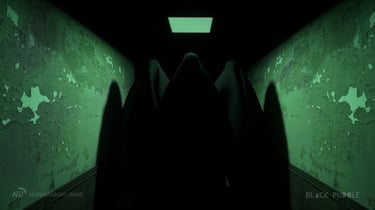
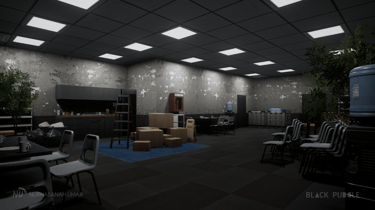
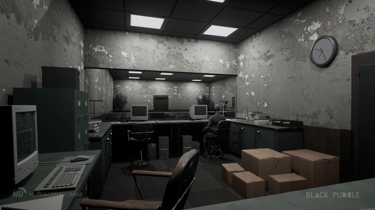
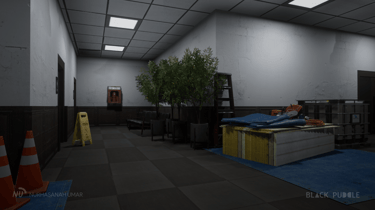
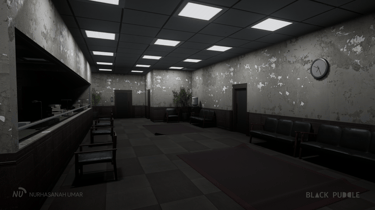
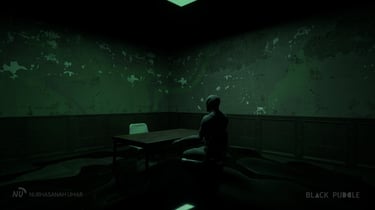

Notes:
This level design project was made streamlined as the game writing of Black Puddle was made, so the changes from the game writing immediately affect the workflow and the level design progress.
Besides being my first UE5 game project, this was the first project/origin of Taksa Semesta (original universe) and was explored through the perspective of the 10th owner of Taksa Semesta's object. This universe also got explored in my second project, Future Siren.
The final output of this project was a prototype phase, mainly focused on narrative, level design, environment design, and light design aspects. The programming side was not the priority.


Game Inspirations
Since it was my first project, and I made an original monsters universe named Taksa Semesta, I balanced the project's originality with the relatability of the game market by making it inspired by existing games: Silent Hill (muted ambience and environment) and Alan Wake (dark multiverse with inner monologues). So, the level design must accommodate the heavy narrative while introducing the gameplay mechanics at a slow-paced tempo.
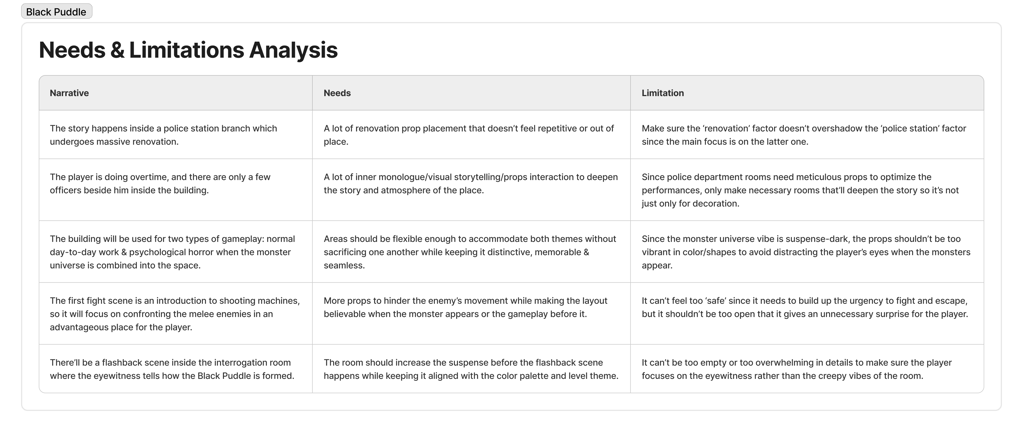
Level Design Scope
This project was designed to be a detective game, so providing a suitable level to actualize the story progression was a must.
That was why the majority of the level design working scope was highly affected by the narrative. Meanwhile, the gameplay was focused on gathering clues and shooting, so there were no complex game mechanics.
This analysis resulted in main guidelines for the whole level design development process.
Real-Life Research about Police Station & Building Renovation
Sources: YouTube videos, Pinterest pictures, websites from Google
Output: list of rooms, different types of buildings, layout references, real-life space dimension compared with adult humans.
(Some) Notes:
The room sizes and facilities that are available depend on the location of the place (rural, big city, etc.) and how important it is in the national police department hierarchy (headquarters, branch offices, etc.).
There is a clear dividing line between things that are related to normal civilians, detectives, police officers workplaces, and inmates. The path to the prison area is usually harder to access for normal people.
Private rooms are usually only occupied by higher-ranking officers, while the lower ranks are usually gathered in one big room based on their specialty.
Fiction Research about Police Station
Sources: Pinterest pictures
Output: layout, blockout, environment art, and overall vibe references.
(Some) Notes:
Furniture placement and size comparison with the room usually feel cramped, sometimes claustrophobic.
The workplaces, especially the detective desks, are messy, and there are a lot of card boxes used to store things.
A lot of police stations have classical/nostalgic feels like old cinema movies.
Research Phase
There wasn't any need to teach complex mechanics to the player, so the missions were intended to introduce Taksa Semesta through detective-style investigation and discoveries around the areas.
It led the player to go back and forth between areas, showed the difference when everything was okay (before people turned into black puddles) and afterwards, which was completely opposite of the 'normal' and 'safe' feelings from the police station building.
The level was located inside a police station, so building a correlated feeling with the IRL place (authority and restricted feeling) helped to deepen the gameplay experience and narrative.
Aside from adding necessary rooms and separating the communal areas with private working spaces, I made long corridors as the key areas. When the player sees doors on the corridors, it would encourage them to explore each room—deepen the exploration.
The story focused on revealed info about the Black Puddle case the player was investigating: how strange those were, the unprogressive investigation, etc., to show how bad the situation was and give urgency to solve the case. Everything fully happened in the present time, so there wasn't any flashback scene.
The narrative progression was fast-paced to accentuate the detective-style problem solving; it led the player to uncover the reasons why the black puddles and monsters suddenly spawned at places where people were staying.
Game Beats V1
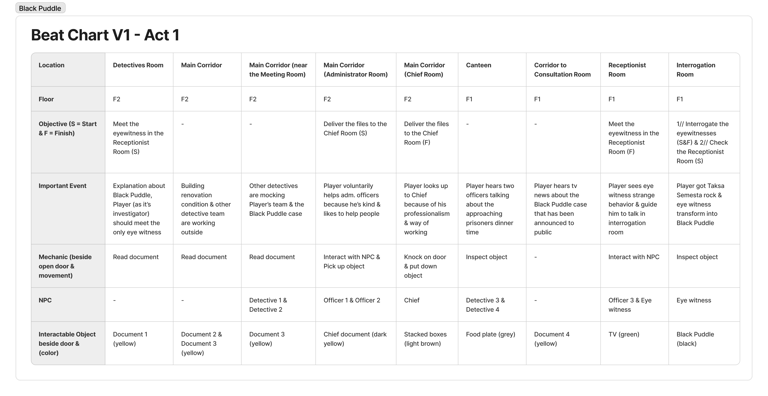
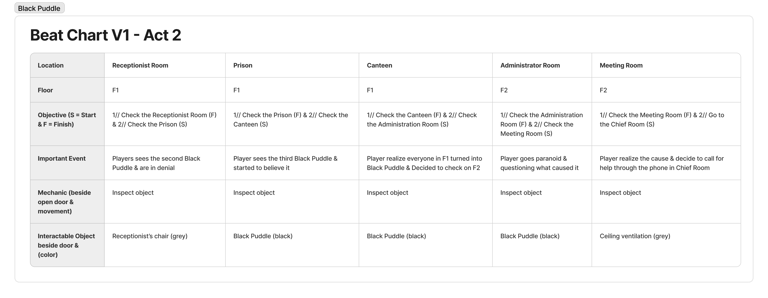
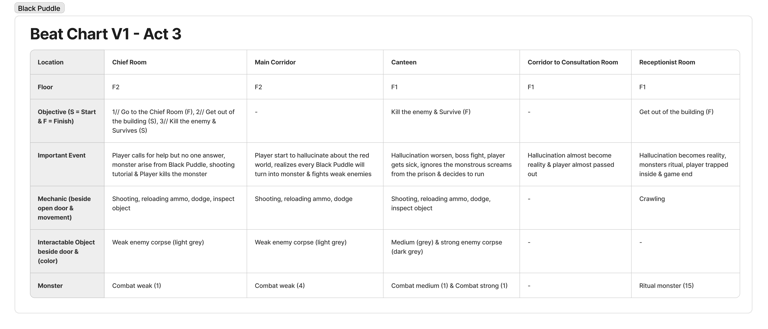
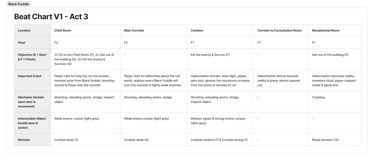
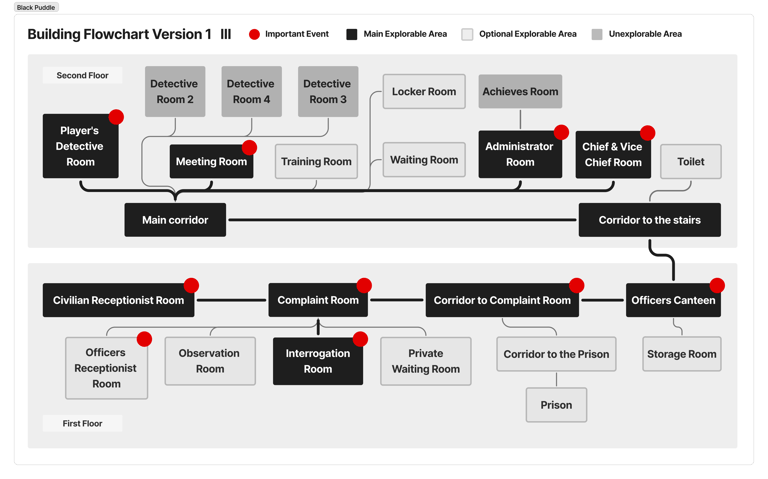
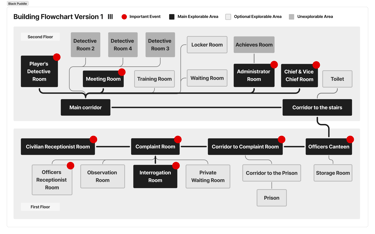

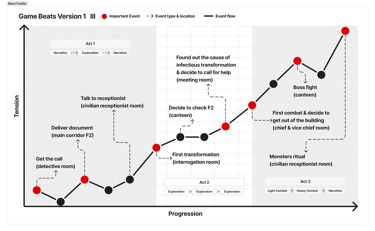
Beat Chart V1
Area Flowchart V1
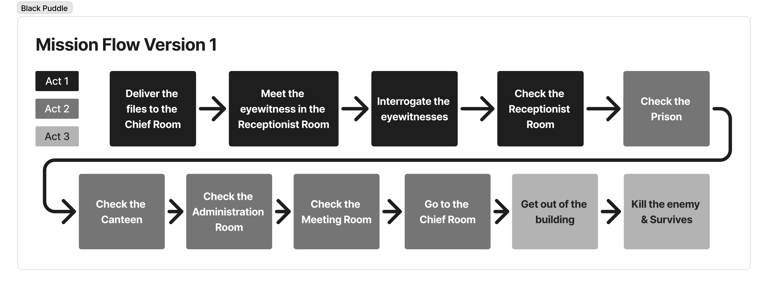
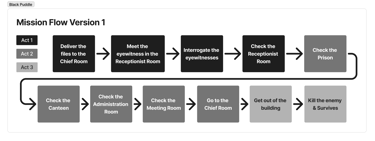
Mission Flow V1
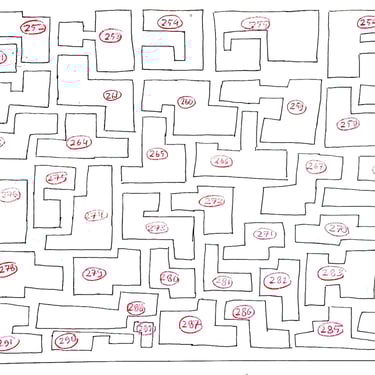
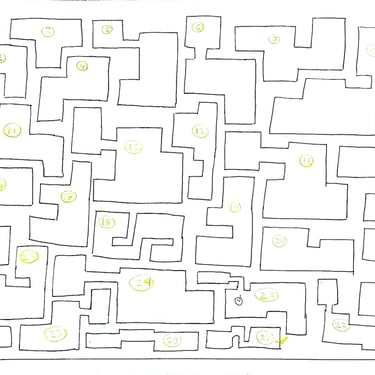
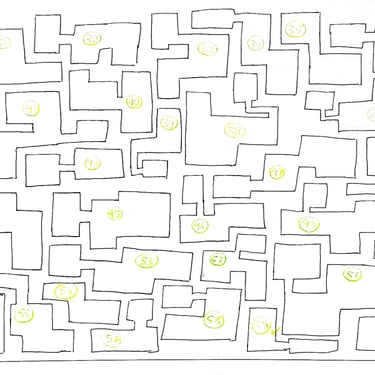
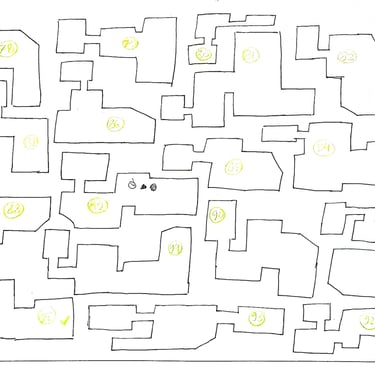
Top-Down Sketches
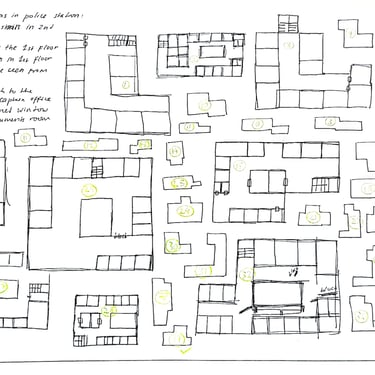
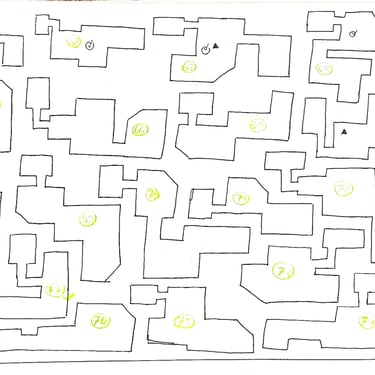
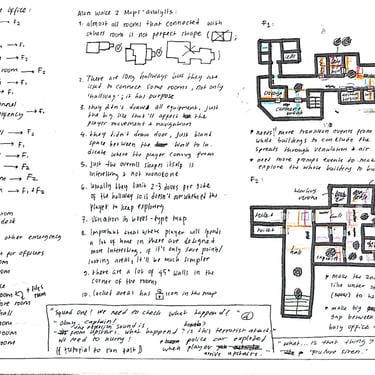
Because creating a two-story building felt too big to do in one go, I did some brainstorming sessions by creating sketches of the overall shape from each floor.
I made tons of them, and to decide on the final alternatives that would be implemented into the blockout, I used a gradual elimination method with two criteria: feasibility and uniqueness if the sketches were made into a real-life building. You can see the final result in the last picture.


Low-Poly Props PT.1
While I was making blockout based on the final sketches, I realized using game-ready assets led to visual distractions and created the feeling of "everything should be perfect right from the start"—which was completely opposite of what blockout was about.
Because of that, I made low-poly versions of game-ready assets in Blender, exported them in .fbx, and imported them back to UE5. Then, I assigned world grid materials along with collision for the proper blockout iteration.


Blockout V1
The low-poly assets were used for the blockout, and the area sizes were adapted based on the prop sizes. Since it was a two-story building, I made the F2 first since it was where the player spawned, the F1 would be made later on.
After I created the whole F2 area, only then did I realize the core problem: the incompatibility scale between the 2D sketches and when they were being implemented into the 3D blockout.
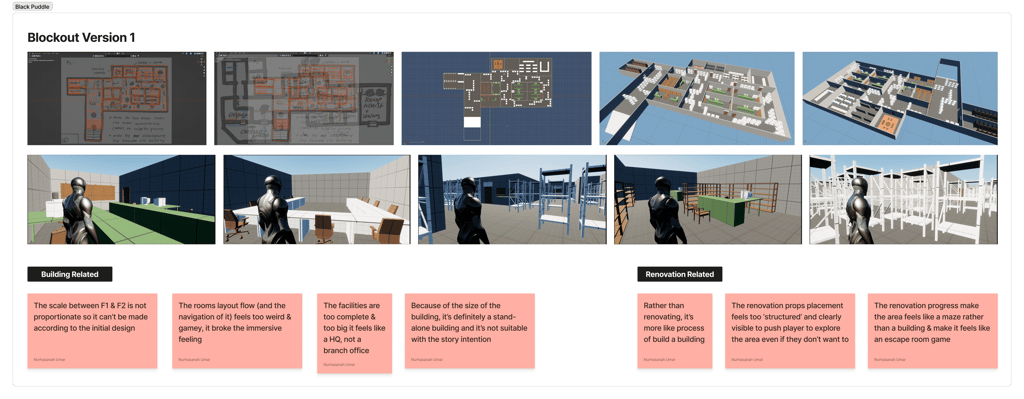

The sketches weren't made on a grid sketchbook, so the sizes of each room were decided through eyeballing. Which means, when those things got built into the proper 3D scales with the exact metric scale, the area dimension became enormous. It didn't feel fun to play, was too maze-like, and didn't check the need of creating a 'mid-size building.' The layout sketch for F1 even got more gigantic, so this blockout was totally unusable.
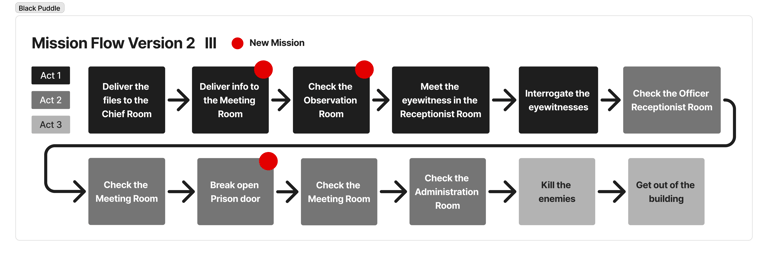
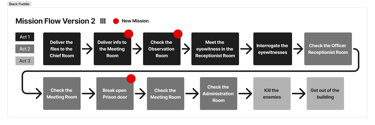
This new mission design was adapted to facilitate the new narrative version. Overall, the core gameplay to uncover clues and fight against monsters stayed the same.
Though, the reasons why some missions happened had changed to adapt to the updated story.
Example: get out of the building mission. In the first version, the player immediately knew the reason for how people in different areas turned into Black Puddle, and he had to tell it to other police. But the communication line got broken because of the monsters, so the player must go out from the building and deliver the info by himself.
Whilst in this version, the player didn't know it. The only reason he had to get out of the building was to survive before he got killed by the monsters. This life-threatening urgency heavily intensifies the tension.
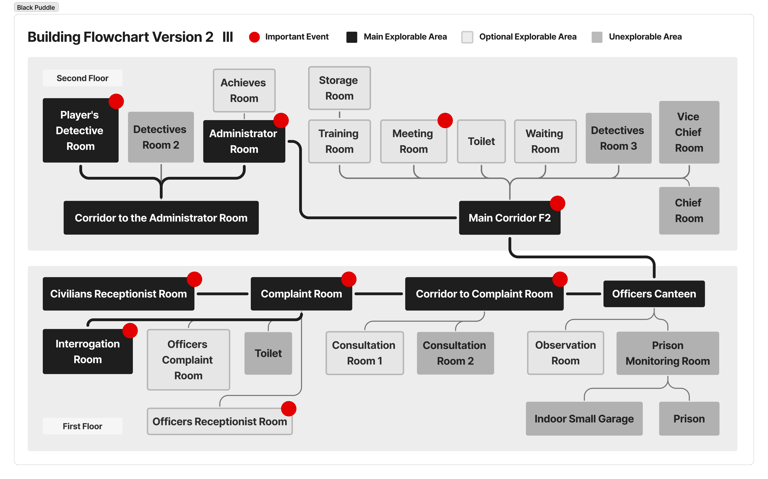
The narrative went through massive revision, and it changed the area flowchart by a ton. From doing playtesting on the previous blockout, I realized the level was too centralized in the long corridor, and it made the exploration feel boring.
This second version solved that problem by breaking the corridor into two parts, so the player would explore them one by one. It improved the focus since the player only needs to focus on fewer areas at a time and enhances the tension when checking the NPCs after the black puddle transformation happened.
The accessible rooms also changed based on the asset's availability and the story progression.
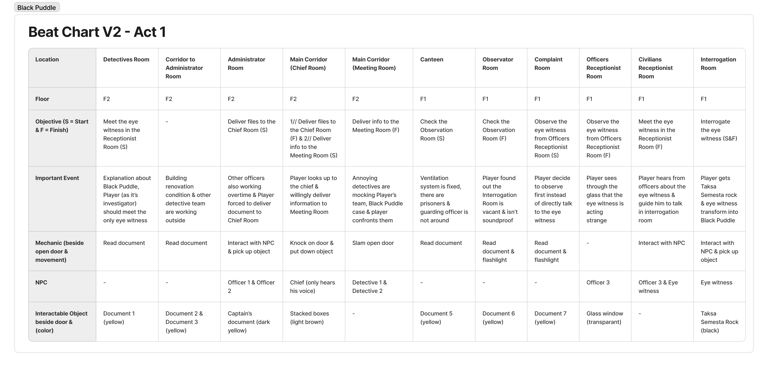
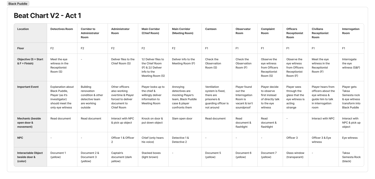
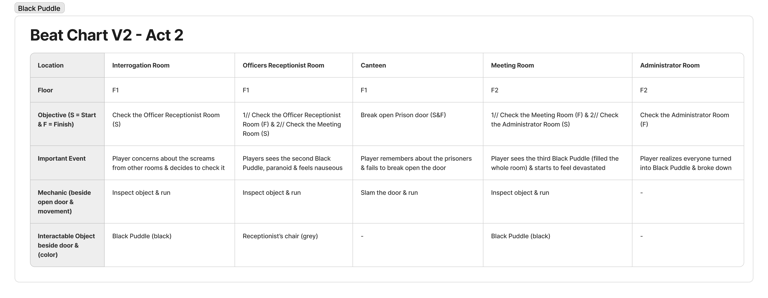
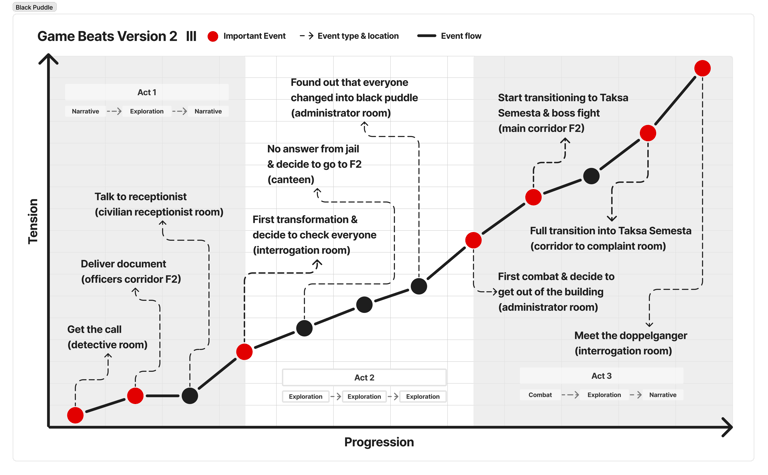
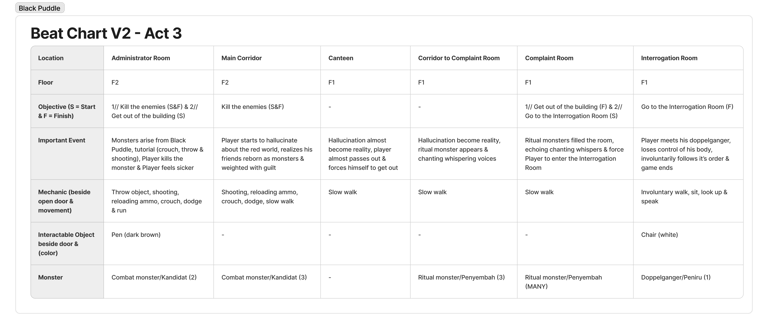
The narrative changed a ton, so the game beats also adapted to it. In the first version, the story progression was too fast, it didn't let the player deeply experience the psychological terror of Taksa Semesta.
The amount of the given information was also too much. It felt like info-dumping instead of uncovering truth in a detective-style game, and it broke the tension and mystery built up since everything got revealed too fast.
So, this second version was focused on slowing down the story progression and reduced the amount of information given to the player to intensify the peculiarities of Taksa Semesta.
Mission Flow V2
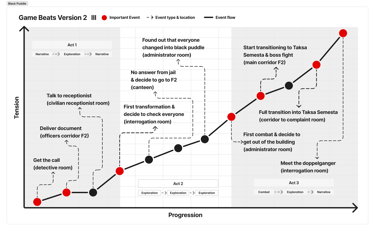
Game Beats V2
Area Flowchart V2
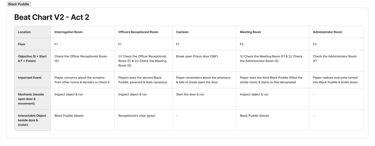
Beat Chart V2
Blockout V2
I made a completely new level in this second iteration while solving the problems from the first blockout. This time, I purely developed the level inside Unreal Engine 5 and Blender instead of created lots of layout sketches and missed the building scales just like what had happened in the first blockout.
I did lots of playtesting on the process to made sure every explorable areas has adequate sizes, intuitive navigation, enjoyable explorations, and has better visual storytelling compared to the previous version.
Beside facilitating the narrative exploration, this new blockout also facilitated the coverage space to take cover from the enemies attack and encourage direct combat in other areas.
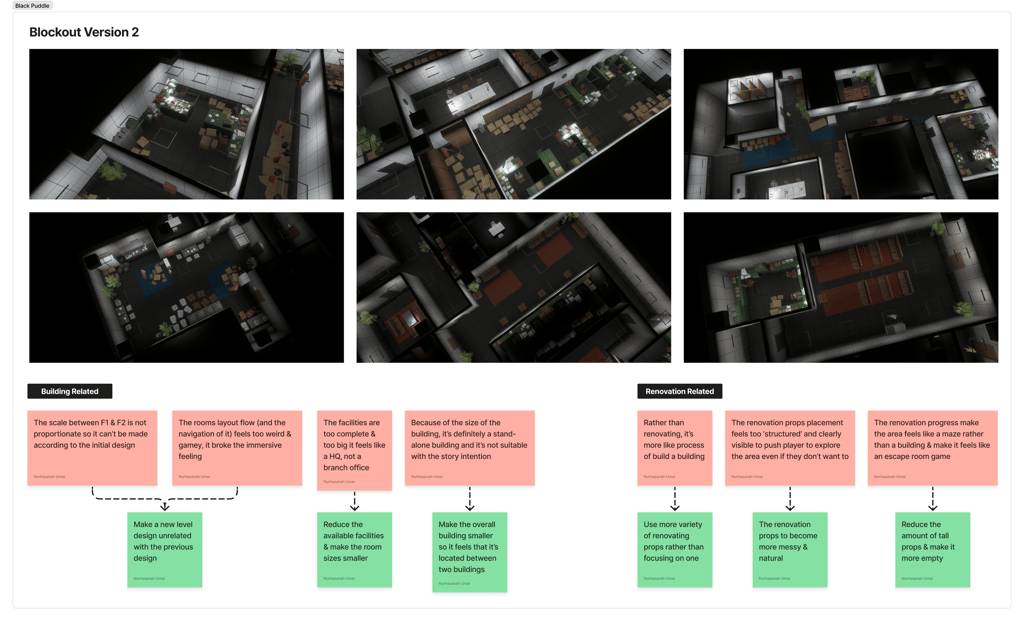

feedback session
There are four respondents that I got the feedback from, and each of them has different specialty backgrounds and different kinds of feedback that I targeted. I did the interview one at a time and fixed the level based on feedback from the first respondent before continuing to the second respondent and so on, so there are 4 revisions in total before the final design was achieved. I also ask them to rank this project based on their area of expertise.


Final Blockout Breakdown
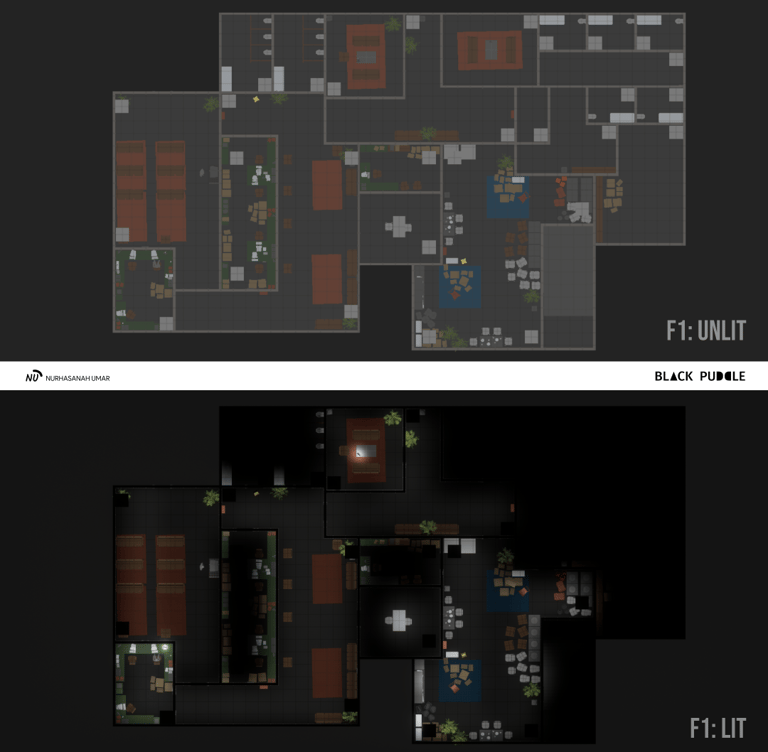
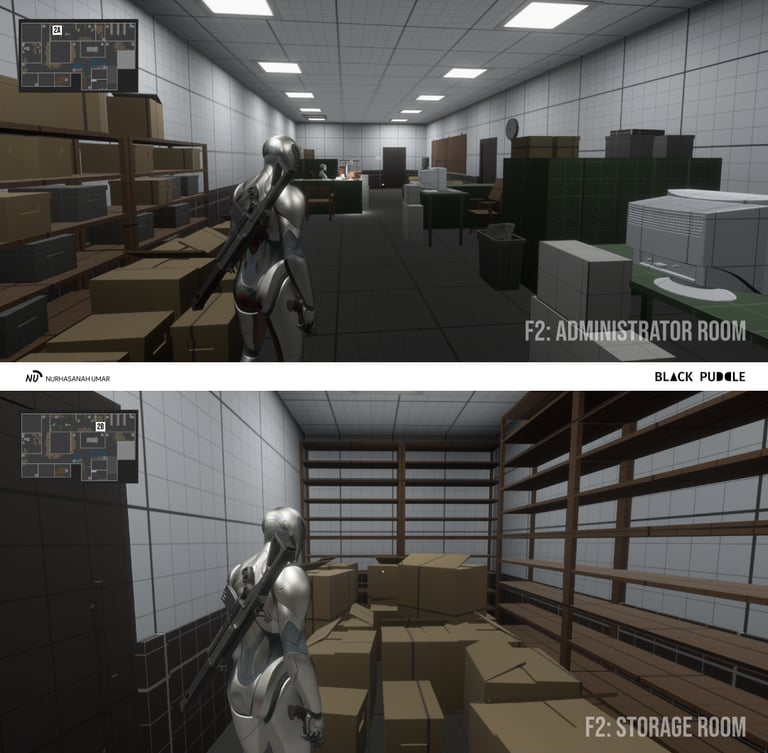

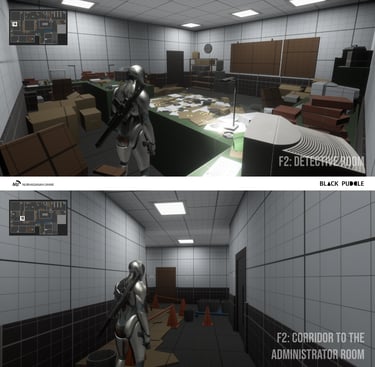
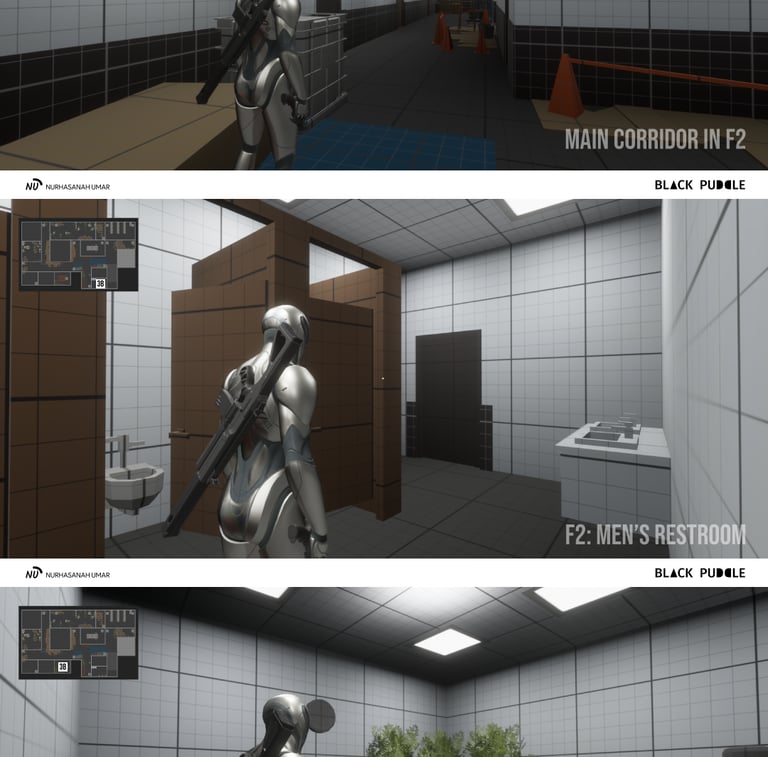
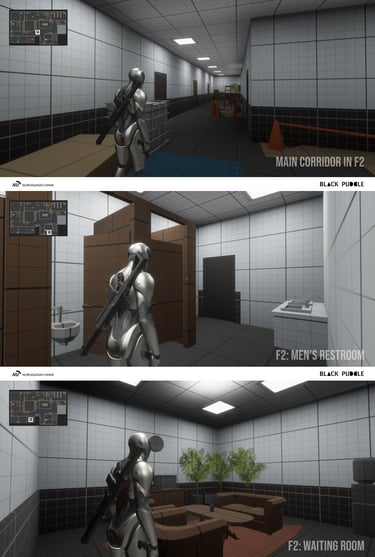


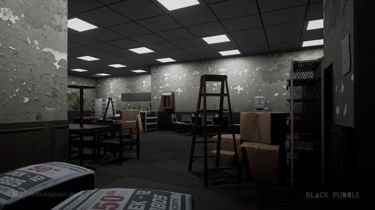
1A. Detective Room → Small room to give the impression the player is inside a medium-sized building & first look at how chaotic the working situation is.
1B. Corridor to The Administrator Room → Focuses on showing the whole building condition & introducing the ambience through visual storytelling.
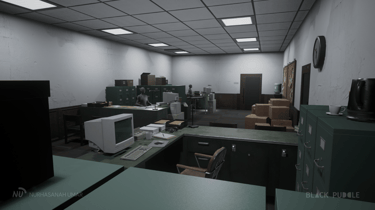
2A. Administrator Room → The player interacts with NPCs for the first time, so every prop and light are aligned to guide the player to go to them.
2B. Storage Room → Additional explorable areas in F2 to deepen the building’s ambience.
3A. Main Corridor in F2 → For the first part of the game, it is purely used for connecting areas, so landmarks are added to easily navigate between places.
3B. Men's Restroom & Waiting Room → Additional explorable areas in F2 to deepen the building’s ambience.
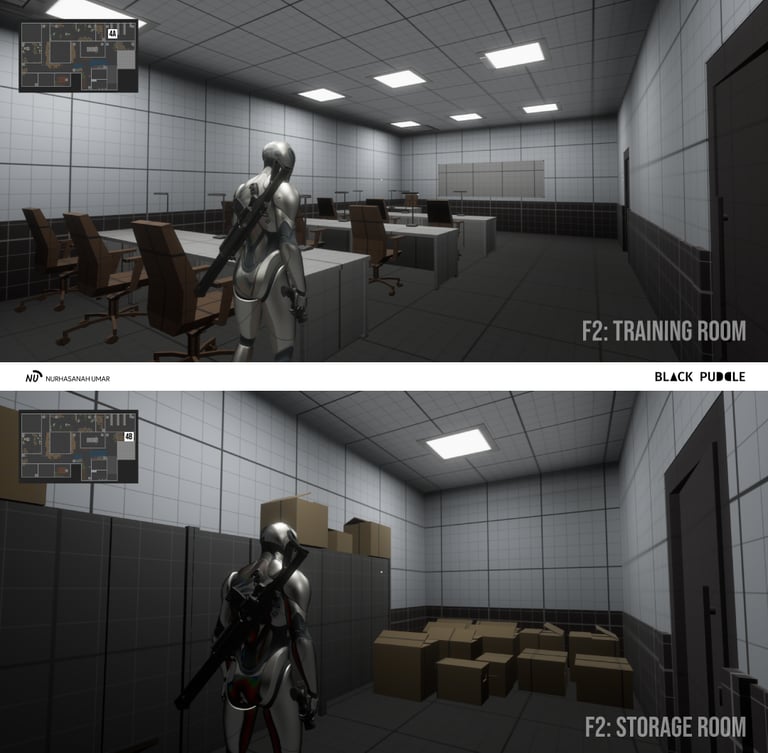
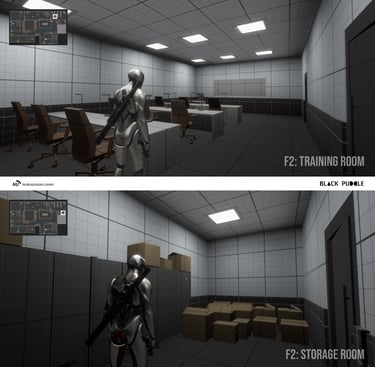

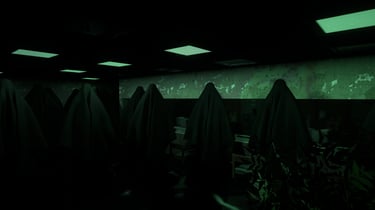
4A. Training Room → Another additional explorable area in F2 to show roughly how many officers are working here to deepen the backstory.
4B. Storage Room → Additional explorable areas in F2 to deepen the building’s ambience.
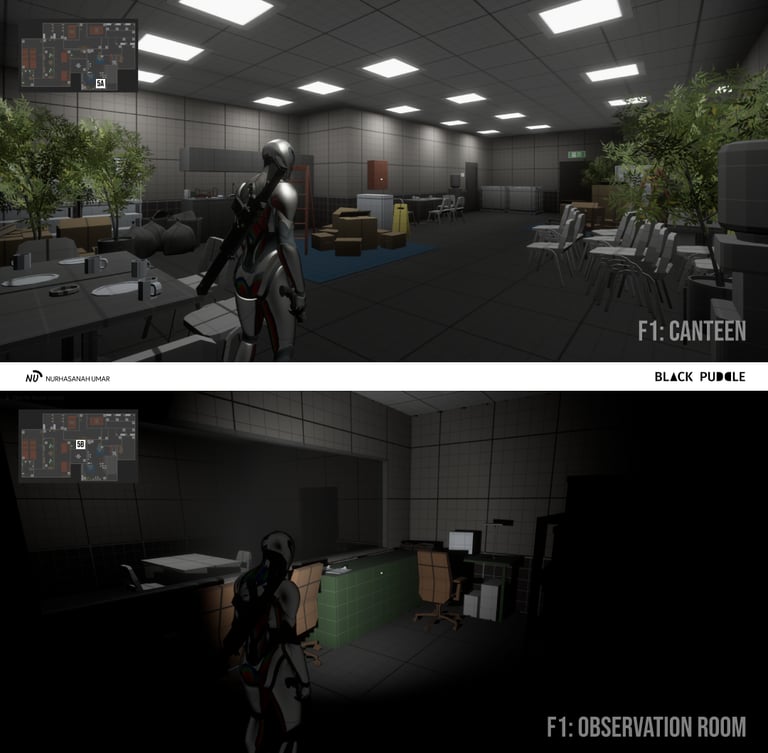
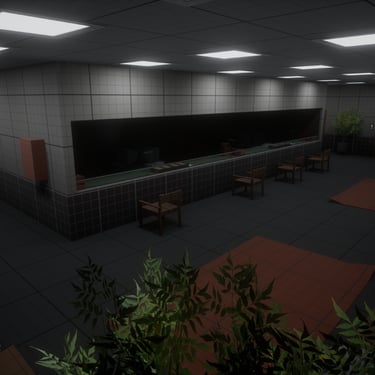
5A. Canteen → For this part of the game, it mainly used to show how the building was before it got renovated and how messy everything was in the officers related area.
5B. Observation Room → Giving breadcrumbs of how the interrogation room looks and causing anticipation for the player to interrogate the eyewitness.
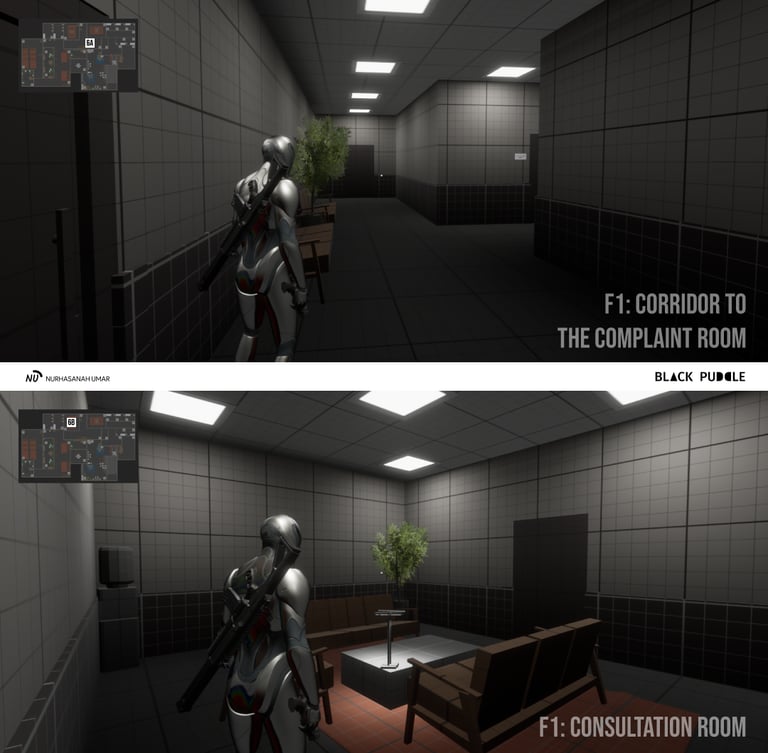
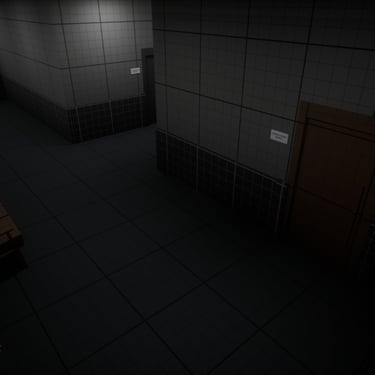
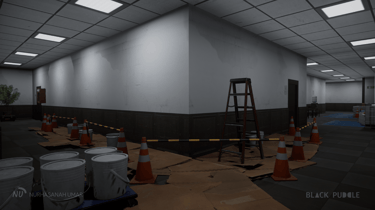
6A. Corridor to The Complaint Room → Transitioning the area between the officers and the civilians so the props are kept to a bare minimum to avoid distraction.
6B. Consultation Room → Additional exploration area in F1 to deepen the building ambience & give visual information of how they treat unimportant people.


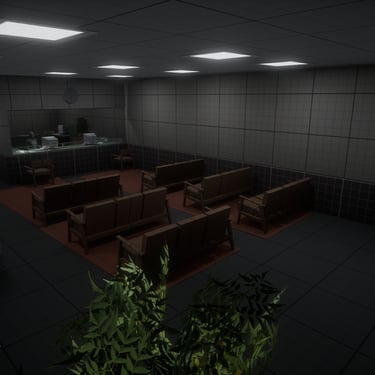
7A. Complaint Room → It’s the main interaction area between civilians and officers, so the room is big to make it multipurpose: waiting room, consultation room & a corridor.
7B. Officers Complaint Room → Additional exploration area in F1 shows the working condition of officers & the civilian reports incensement.
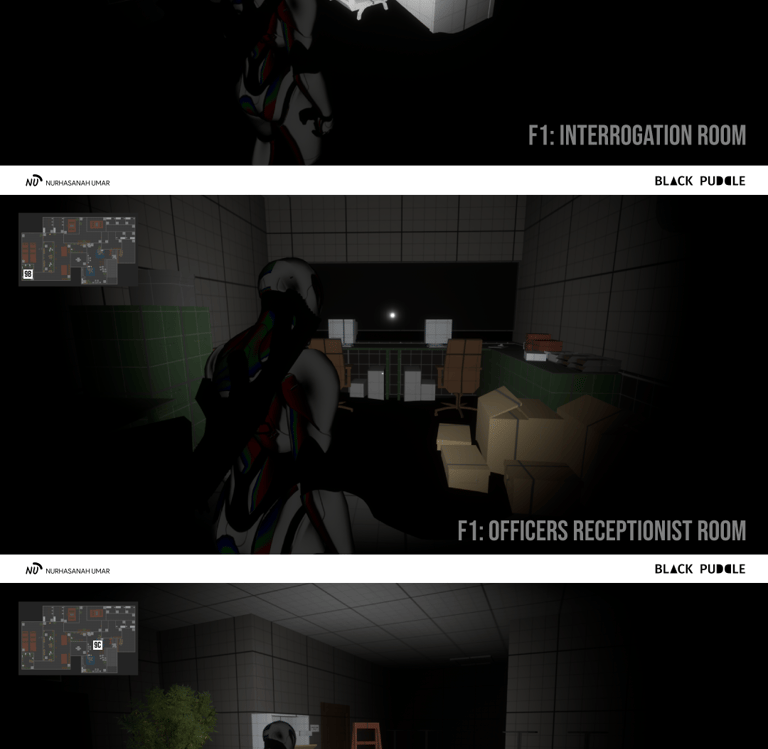
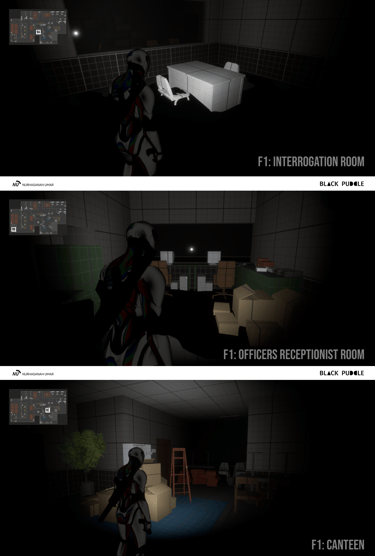
7C. Interrogation Room → Additional exploration area in F1 to give a glimpse of how it’ll be to use the room.
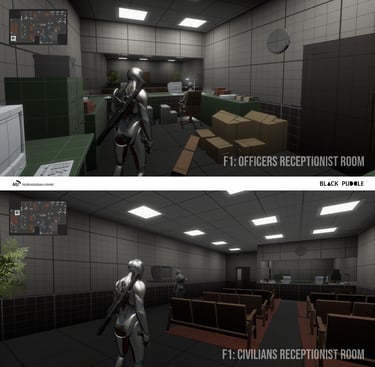
8A. Officers Receptionist Room → This room let the player see the eyewitness from afar, setting the tension & anticipation to interact with the eyewitness.
8B. Civilians Receptionist Room → It’s the place where the player meets with the eyewitness, so the room is purposely designed to look ordinary to emphasize the NPC.
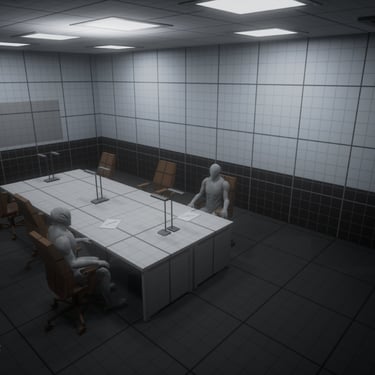
9A. Interrogation Room → Place where the interrogation and flashback happen & the eyewitness NPC turned into Black Puddle.
9B. Officers Receptionist Room → The receptionist NPC turned into Black Puddle & the player decide to check other people in case somene survived and need help.
9D. Canteen → The player tries to break open the locked door to the prison to check the prisoners, but fails to do so.
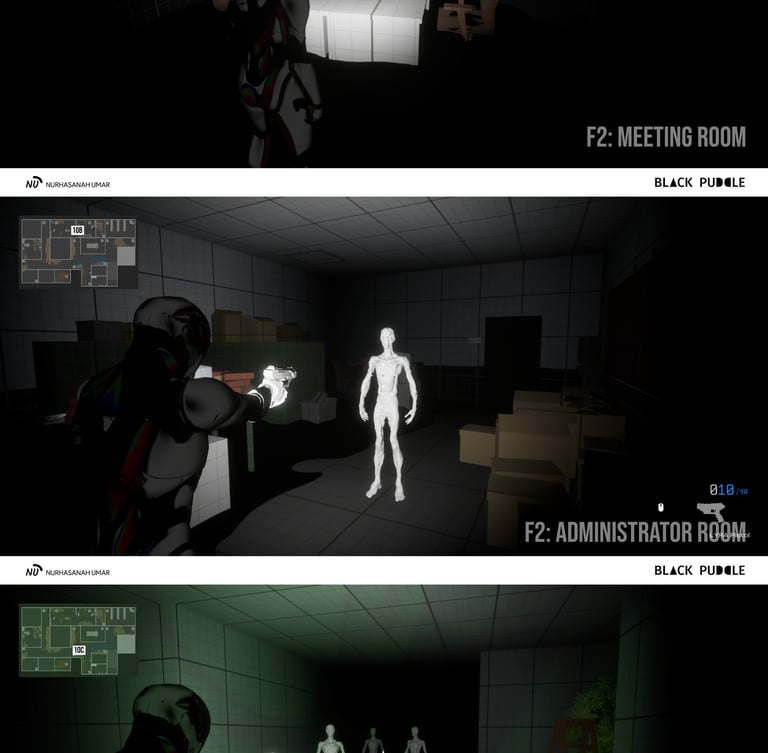
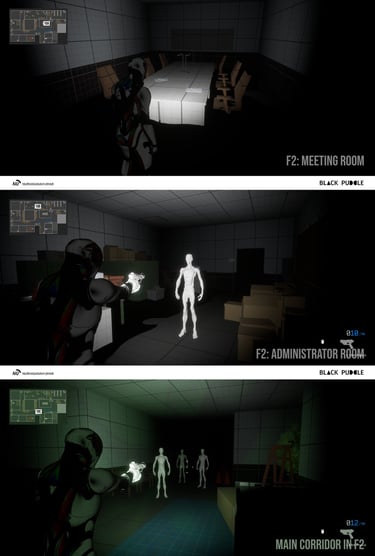
10A. Meeting Room → Black Puddle almost filled the entire area to show how big the puddle can be & increase the progression tension.
10B. Administrator Room → The first transformation into a monster, combat area & teaching the combat mechanics.
10C. Main Corridor in F2 → Main place for combat, high-paced gameplay, desperation, & first experiences of hallucination for the player.
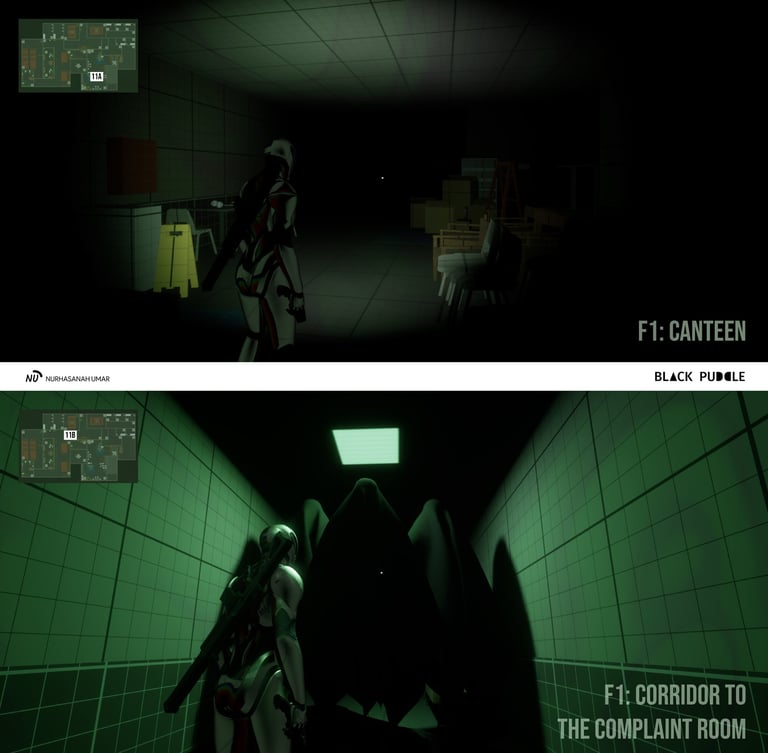
11A. Canteen → Place where the player heavily experiences the hallucination & ambience changes even though the surroundings stay the same.
11B. Corridor to The Complaint Room → Place where the hallucination becomes the reality & the introduction of another monster (Peniru).
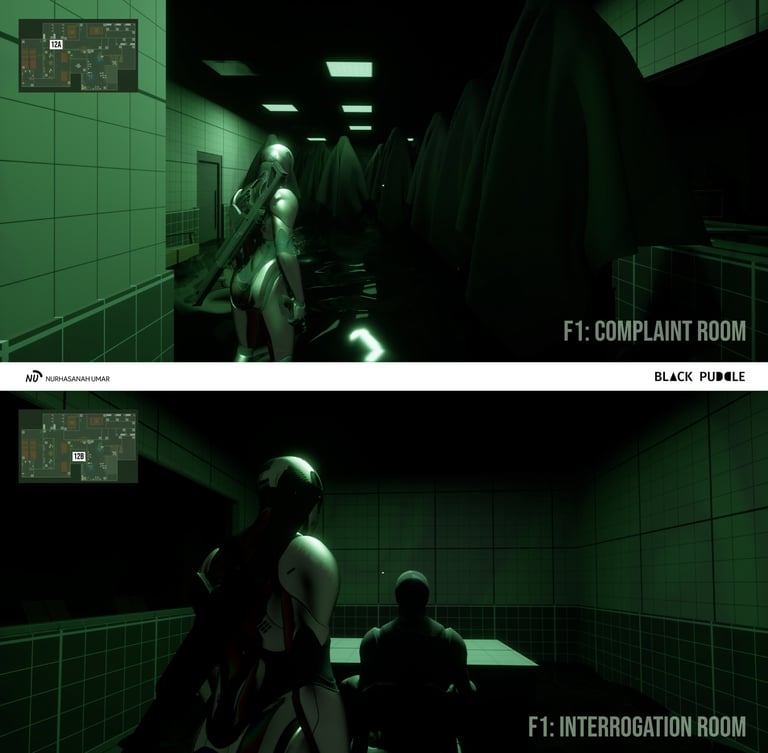
12A. Complaint Room → This room now focuses on showing the eeriness and changes the Peniru can make; even the ordinary place can feel scary.
12B. Interrogation Room → Final area where the player meets his doppelganger (Peniru), peak suspense, thriller, confusion & cautious feeling.
Layout of F1
Layout of F2
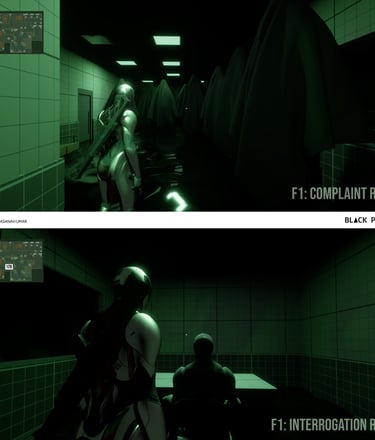
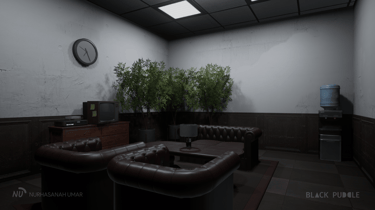
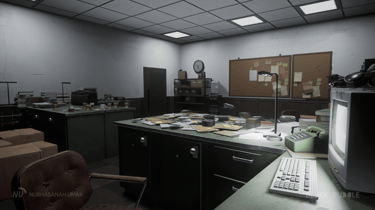
Blockout Render
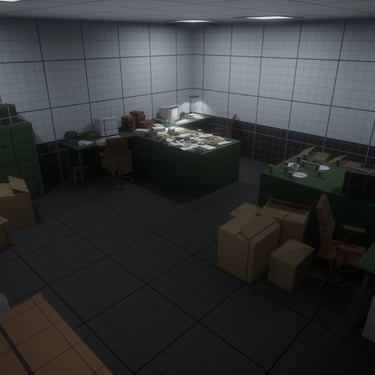

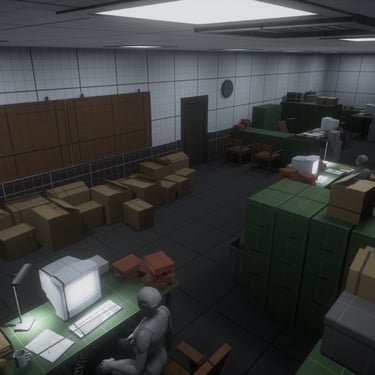
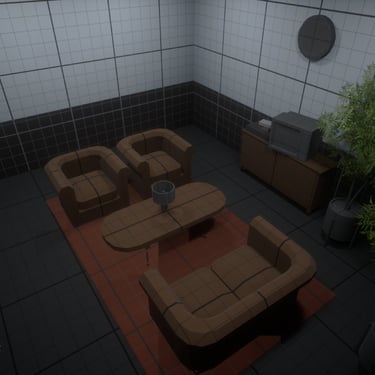




Cinematic Render
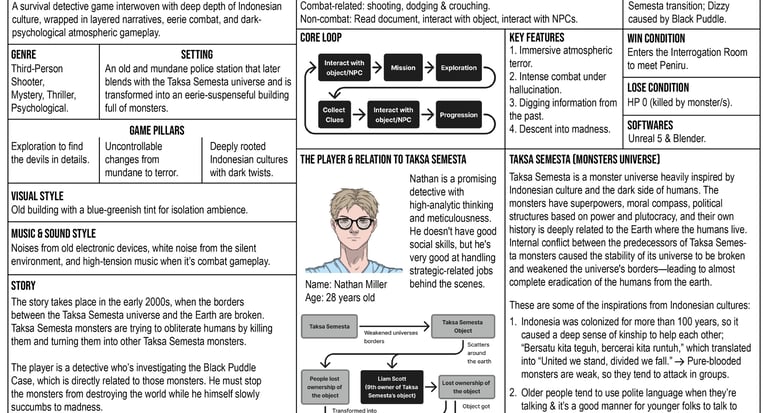
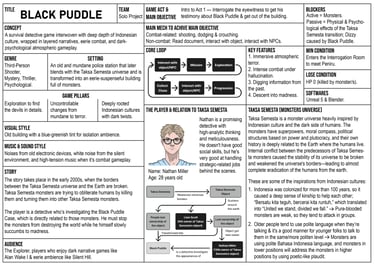
One Pager
Playthrough (art pass)
Final Blockout

Things I’ve Learned
Complexity of the level and the feasible environment style are depend on asset availability. So, understanding the assets’ potentials are mandatory to know whether a concept can be implemented or not. Assess the situations and adapt to them.
Narrative and level design is deeply interconnected with one another, so do expect revisions based on narrative updates and vice versa. Be smart when translating the narrative needs and limitations into the level, make sure to do throughout analysis before implement new changes.
Playtesting is a must when doing blockout to make sure the level achieve the desired gameplay experience, so using game-ready assets are visually distracting. If possible, create the low-poly versions of them. But if not, use world grid materials to tone down the visual distraction.
Creating layout sketches helps with brainstorming process and refining the level ideas. But, it doesn't mean the sketches can be 100% implemented into the blockout. Use them as baseline when making the level, playtest a lot, and adjust/refine them to get better gameplay result.
Input from people is crucial to improve the project since they see things from different perspectives. Analyze all inputs, calculate the risks, feasibility, and potentials, and implement feedbacks that'll improve the project's quality.
Level design is all about making and improving gameplay experience, so changes will constantly happen. Don't get too attached to anything (ideas, concepts, layouts, etc.) so we can process everything logically and improve the gameplay experience.
Resources
Third Person Shooter Kit by Soriox: https://youtu.be/BJlk0ha_FsM?si=juErAVGXFM7ZeBoH
Build a Detective's Office Game Environment: https://fab.com/s/2f39819b9b52
Industry Props Pack 6: https://fab.com/s/e183defdb46b
Construction Site VOL. 1 - Supply and Material Props: https://fab.com/s/071c72b78173
Construction Site VOL. 2 - Tools, Parts, and Machine Props: https://fab.com/s/6e366c546b51
Apartment Tech Props: https://fab.com/s/a72cd33dbf80
Free Furniture Pack: https://fab.com/s/30988ec34e44
Grocery Store Props Collection: https://fab.com/s/57118a9df6b7
Zombie Corpse High Poly Skulpt Free 3D model: https://www.cgtrader.com/free-3d-models/character/fantasy-character/zombie-corpse-high-poly-skulpt
Other assets and materials: Quixel Bridge, Unreal Marketplace
Audios: Epidemic Sound
© 2025 Nurhasanah Umar. All rights reserved.