
LD: Future Siren
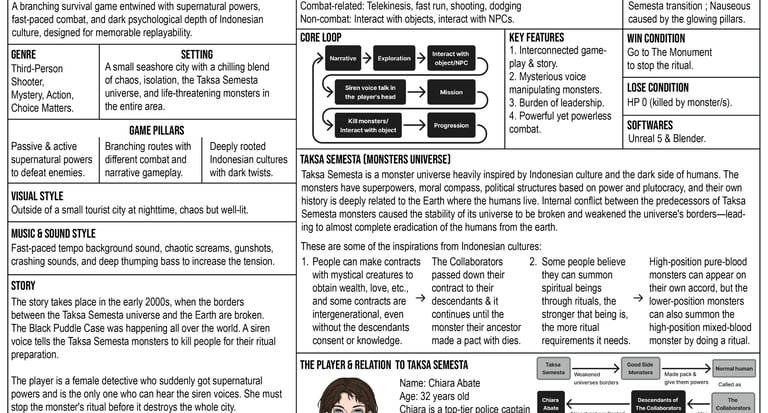
Third-Person Shooter, Mystery, Action, Choice Matter
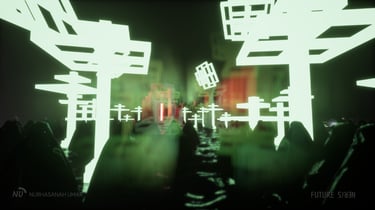
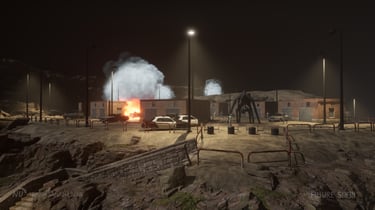
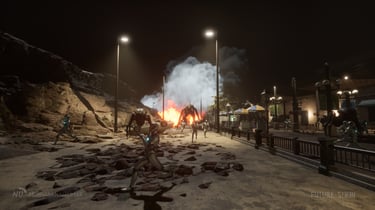
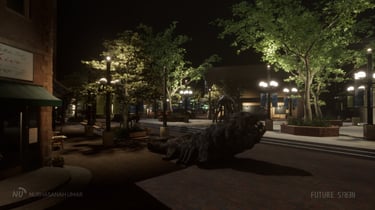
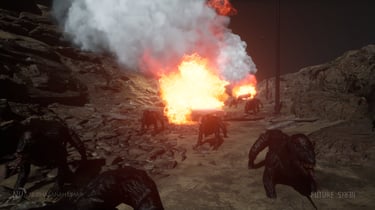
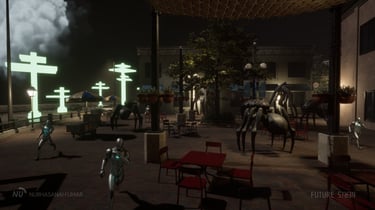

Notes:
This level design project was made streamlined as the game writing of Future Siren was made, so the changes from the game writing immediately affect the workflow and the level design progress.
This was the second project/continuation of Taksa Semesta (original universe) and was explored through the perspective of a descendant of The Collaborator, whilst the first project was Black Puddle.
The final output of this project was a prototype phase, mainly focused on narrative, level design, environment design, and light design aspects. The programming side was not the priority.


Game Inspiration
This project was inspired by Control (shooting, telekinesis, and fast-run mechanics) and Hogwarts Legacy (interconnected branching narrative in combat gameplay), so the level design must accommodate the branching storyline with different explorable areas and medium/fast-paced combat that has shooting, fast-run, and telekinesis mechanics.
Real-Life Research about Seashore City
Input: YouTube videos, Pinterest pictures, Google Maps
Output: type of city and the road, harbor characteristics, there rarely any boundaries IRL, how location from the big city impacts the population size and the city.
(Some) Notes:
The harbor and city shapes depend on the natural terrain. Humans follow and adapt to it, not change it.
Modern cities and rural areas have different characteristics. It also affects the building placements, walk areas, and the road.
The harbor size and quality depend on the city near it, especially if it’s not an active area for sea transportation for business.
Available Assets for Unreal
Input: free assets at Unreal Marketplace & Quixel Bridge
Output: decide the architecture style of the city, change the harbor area into a seashore cliff, and decide on art and blockout limitations.
(Some) Notes:
There are various types of building architecture, but most of them are modular assets that need to be assembled.
There is a ship asset, but there are a lot of natural assets on the beach.
The assets that produce light are limited to a few streetlights, traffic lights, and lamps, so the placement of the props must be optimized.
Research Phase
Level Design Scope
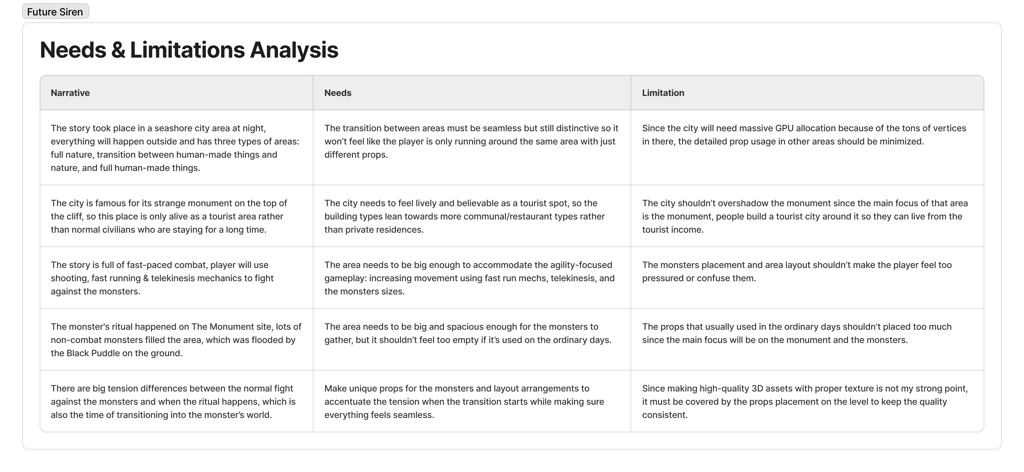
Since it was a branching narrative, the level must be aligned with the conceptualized routes and areas. The story setting and tensions became the main focus of the analysis since they directly affected the blockout process.
The game writing provided narrative aspects that needed to be facilitated, so I made an in-depth analysis to correlate them with level design. This was used as the main guide throughout the development process.
The phase of this project was Intro to Act 1 of the full game. So, the missions were focused on introducing the worldbuilding, current problems, and train the player to get used to the combat mechanics before the full game starts.
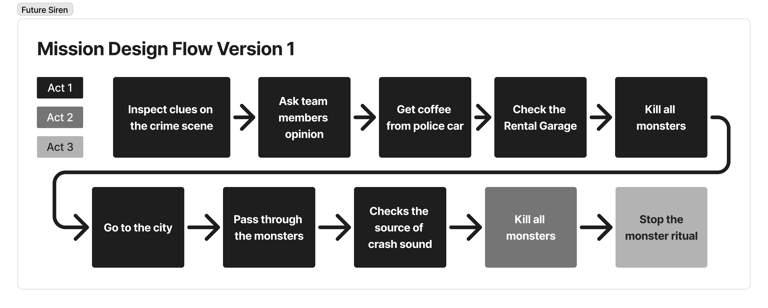
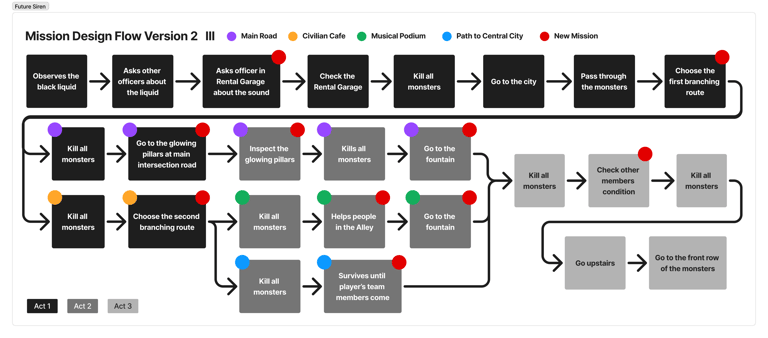
After I did some analysis, I realized the core gameplay in this phase was combat. So, I was thinking, “Even if it’s a branching story, the mission will be the same—killing monsters. So, I only need to make one mission flow but create it in different environments to show the distinction between each route.”
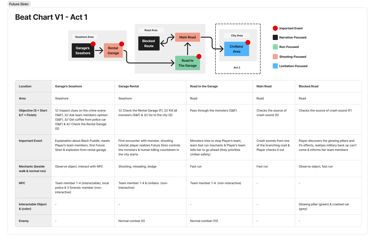
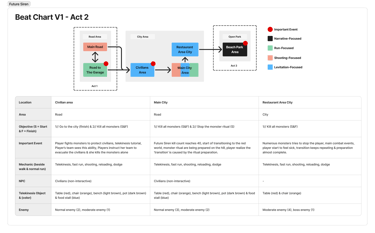
In this first flowchart, I focused on incorporating nature with the civilized area to get the mood of the 'seashore city' theme. The exploration areas were to the point, and the branching happens from different paths to explore inside each area.
Considering the city has big exploration areas to facilitate various combat mechanics to fight against the monsters, I created other areas to be smaller and more linear exploration.
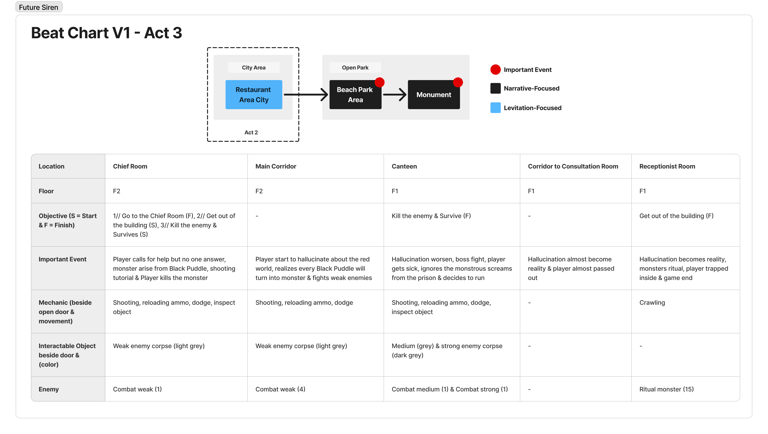
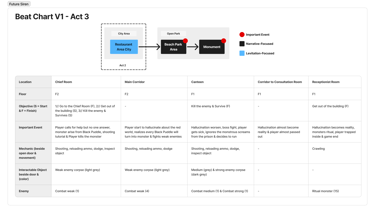
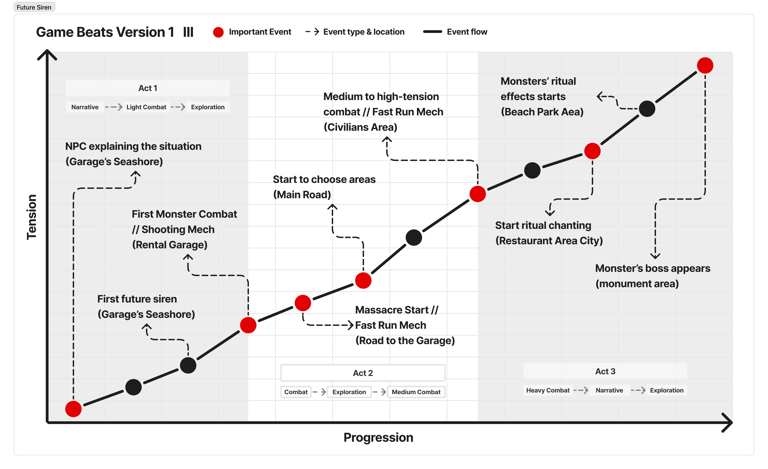
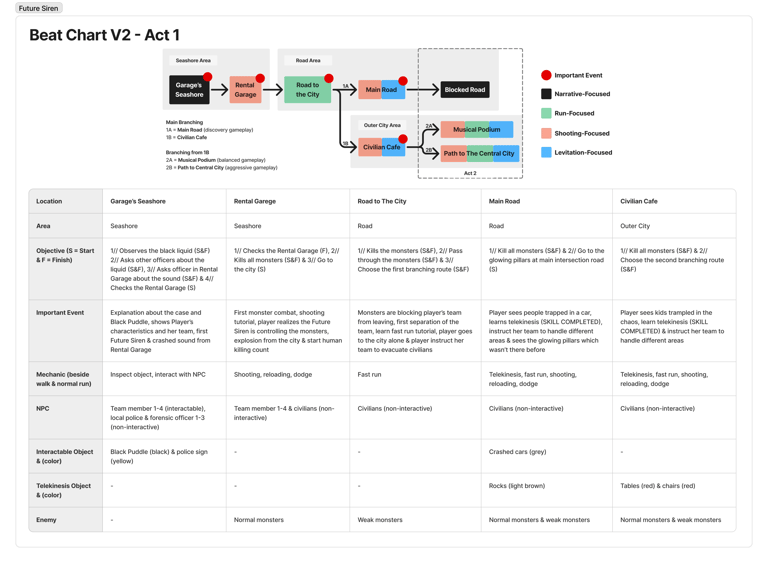
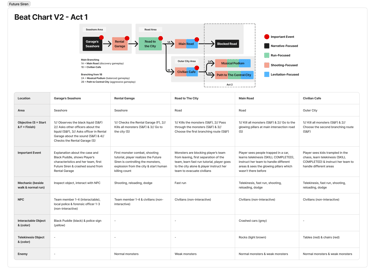
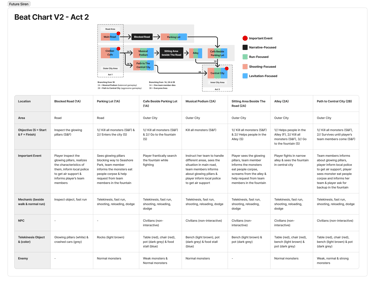
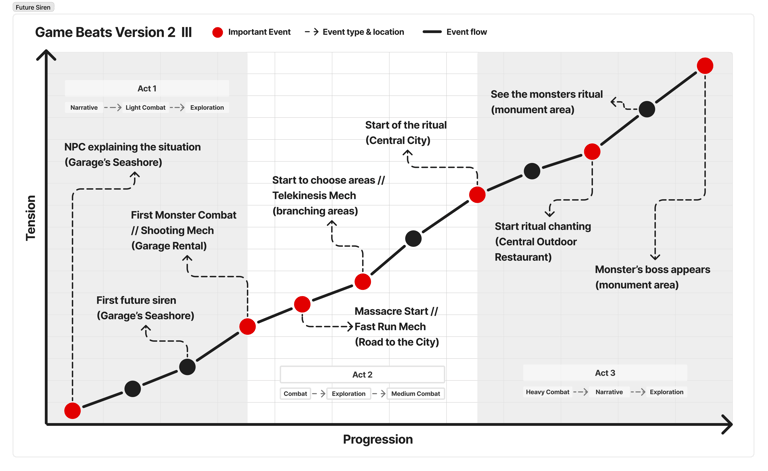
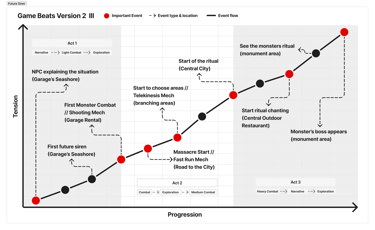
The story happened in the present time, so there was no flashback or clairvoyance. Since it has branching routes, the beat chart facilitated the general progression. The main differences would be shown inside the screenplay.
The story and tension progressed gradually, adapting to the increasingly difficult combat that became harder the nearer it got to the peak events of the story.
Mission Flow V1


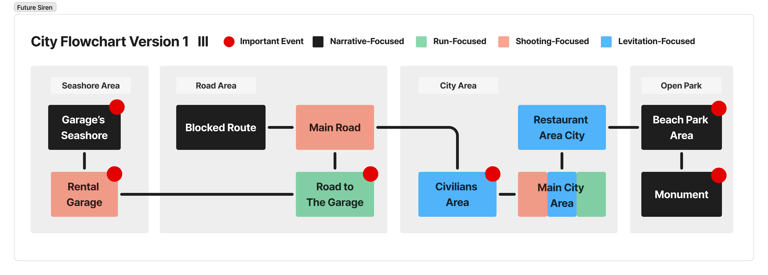

Area Flowchart V1
Game Beats V1
Beat Chart V1
Top-Down Sketches
I created fewer explorative sketches compared to the Black Puddle project to prevent the loop of 'making perfect sketch', so I could focus on creating blockouts and refining the ideas.
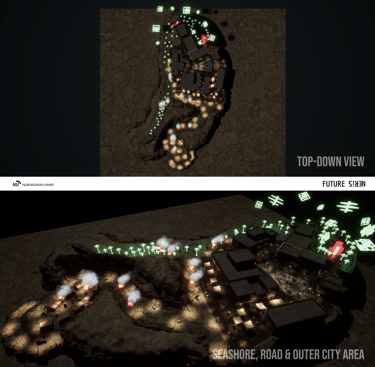
The sketches focused on environment blocking, buildings, and layouts of high terrain in the seashore areas. I aimed to make everything feel natural, where the city follows nature's contour. It eventually creates an organic navigation flow for exploration.
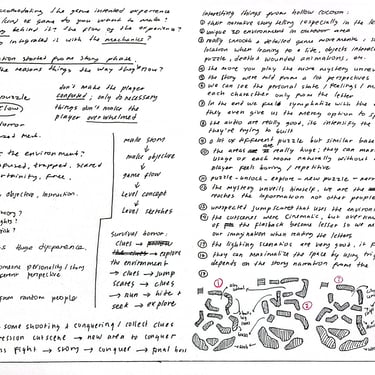
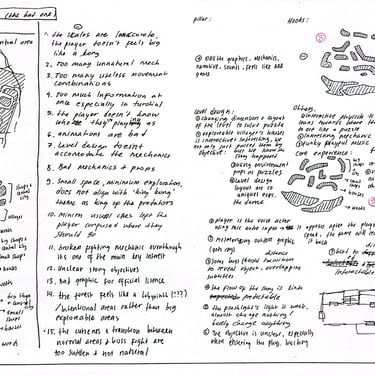
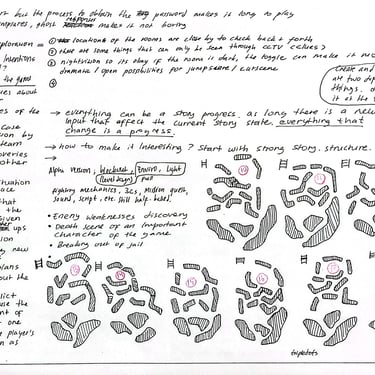


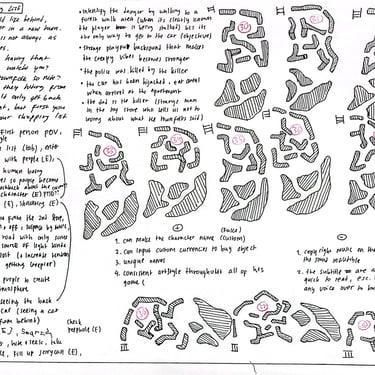


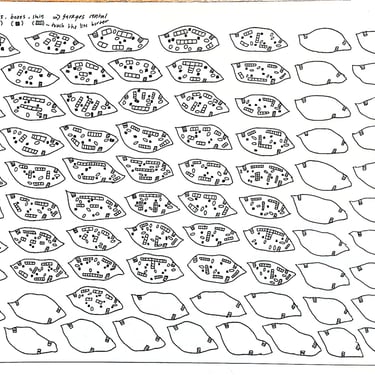
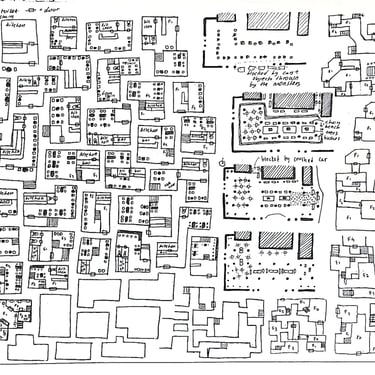
How I decide which final sketches to make into blockouts was through gradual elimination methods using three criteria: how suitable the layout is with level intention, exploration possibilities, and its navigation uniqueness. Pardon the unrelated scribbles since I made the sketches inside my general gamedev book.
Low-Poly Props
To reduce distraction from using ready-to-use assets, I made low-poly versions of the assets I would use inside Blender and exported them in .fbx format. Then, I added collision and world grid materials inside UE5, resulted in less visual distraction and optimized engine performance.
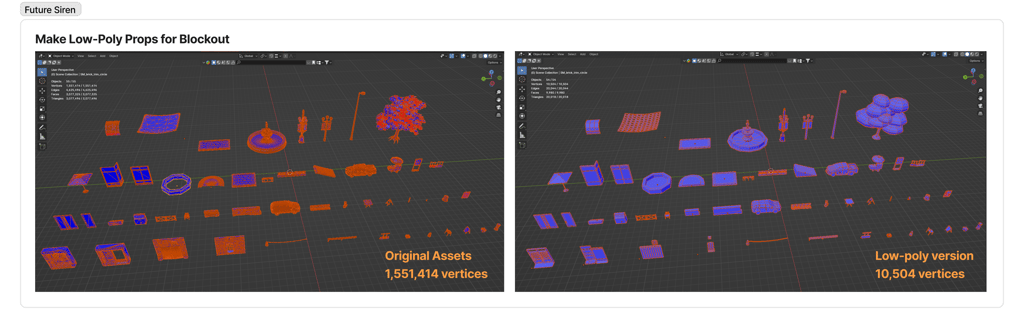

As for the enemy, I used free 3D assets since character design wasn't my strong suit. This prototype phase used it for the sake of enemies blocking, overall combat feels, and to design the tension. If this project got made into a full game, those enemies assets will be replaced by original ones.
Blockout V1
The chosen sketches were used as the baseline of the blockout. I made the buildings and road sizes to have accurate sizes with how they were IRL to make the environment feel natural.
Problems arose when the level was being playtested. The exploration distance was okay when I used normal walk/run, but it felt too short when I used fast-run, which was alarming since it would be one of the key game mechanics that would be used most of the time.
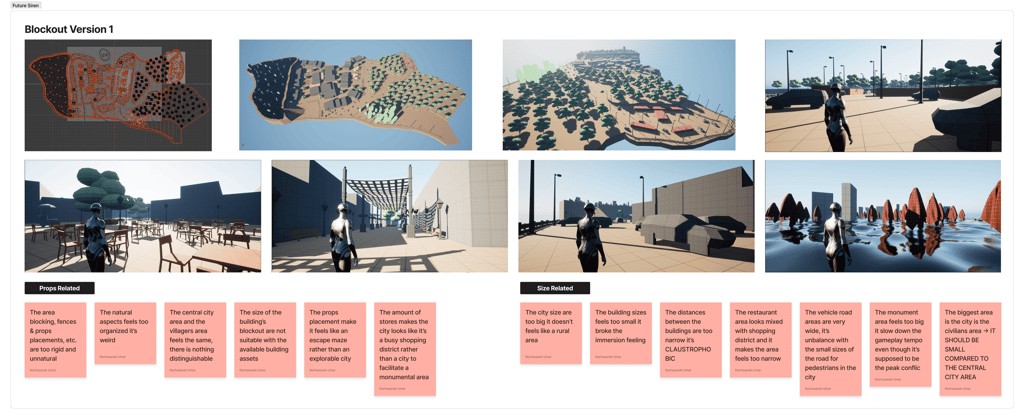
Using IRL sizes also made the buildings and explorable roads feel too small, it messed up the proportion and broke the immersion. There were other more problems, see the sticky notes for details. This blockout phase gave important inputs for the narrative development to make more areas to explore, so the branching routes become distinctive and meaningful.
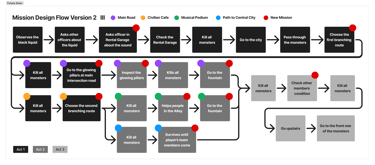
The mission design adapted to the new narrative and explorable areas to accommodate different gameplay experiences, so there were tons of changes.
These new missions provide different combat difficulties, tensions, and discoveries. Here is the short version of it, you can see more on the game writing page.
Main Road route = self-investigation & more focus on narrative
Musical Podium route = balanced combat & narrative
Path to The Central City route = speedrun & the hardest fight against the monsters
The narrative and level design went through big collaborative revisions that completely redesigned the branching routes, so each one has distinctive gameplay and discoveries.
It resulted in massive expansion of the areas, categorization based on location types, and assigned different gameplay for each route.
To prevent the player from exploring areas outside the designated route, environment blocking was used to limit the movement but still expose the visuals from other areas to intrigue the player to choose that route on the next gameplay.
The core story progression stayed the same and only differed in where they happened, which has been adjusted to the new area flowchart.
To balance the different combat tensions, the narrative discoveries were made to be the same across all routes, the difference was how those were revealed—the player experiences them by themselves, or the info is told by teammates—which depended on the chosen routes.
Mission Flow V2
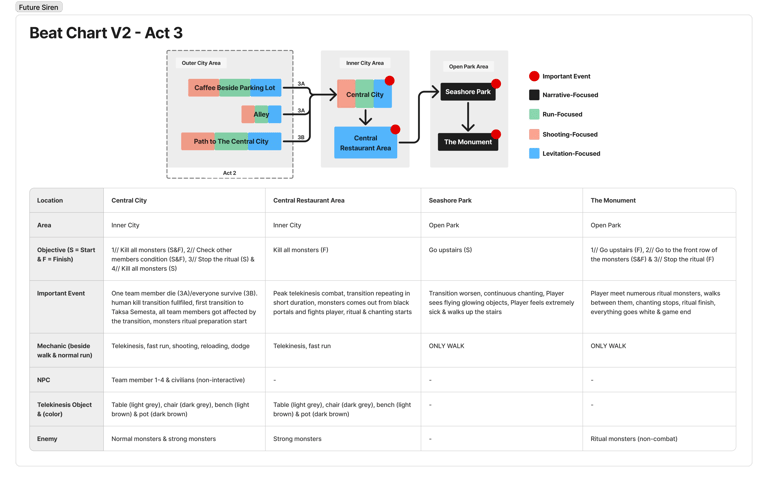

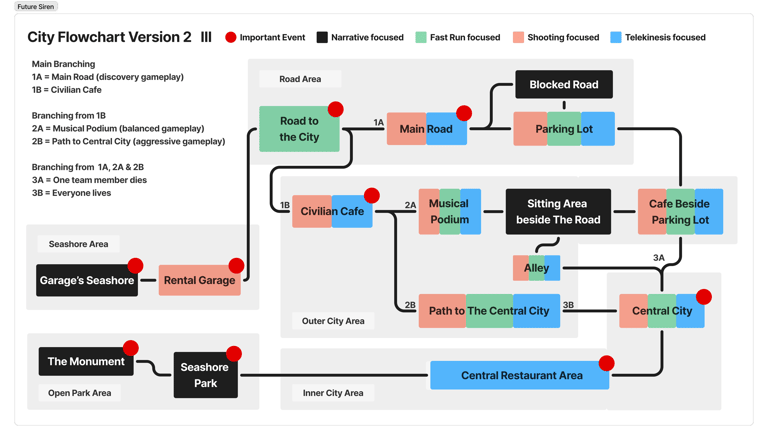
Area Flowchart V2
Game Beats V2
Beat Chart V2
Blockout V2
Problems from the first blockout, massive narrative changes, an updated area flowchart, and the new mission design basically led me to remake the level to solve all of the issues and facilitate every new aspect.
I did more playtesting when making the blockout to make sure the object sizes and distances were proportionated, adjusted the props and environment blocking so it doesn't feel like a maze, placed landmarks in different areas to make each place feel distinctive, etc.
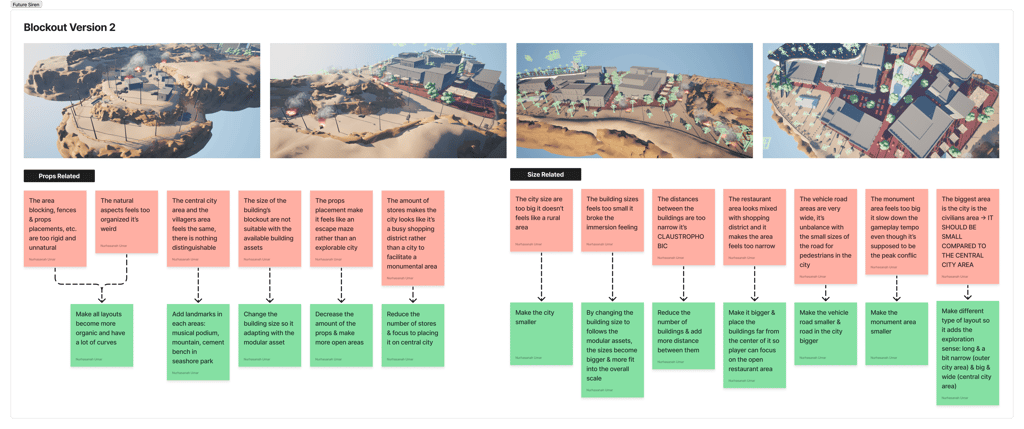
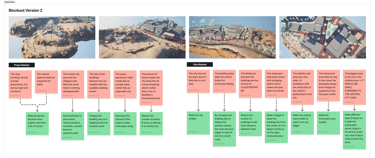
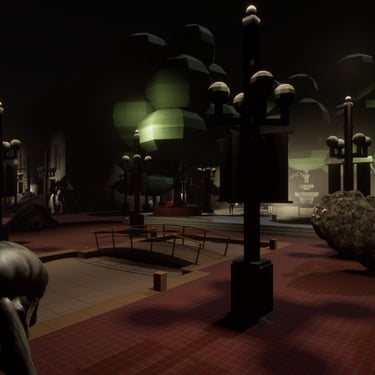
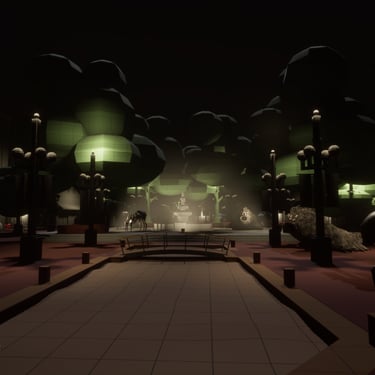
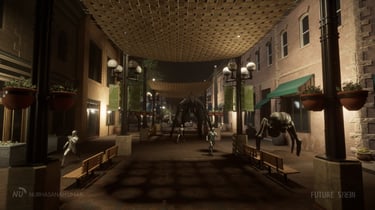
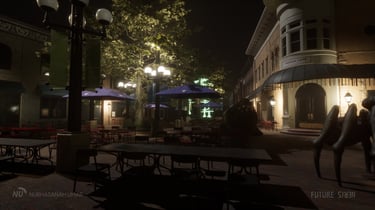
Besides improving the gameplay experience, I also elevated the visual storytelling aspects by adding props related to the areas (rock walls, streetlamps, potted plants in the city, cemented podiums, etc.) which also helped the lighting and polishing phase later on.
feedback session
There were four respondents at the feedback phase, each from a different specialty background. I hosted the interviews one at a time and asked different kinds of questions based on their areas of expertise, so the result was more accurate. I used their input to refine the level, and asked them to rank this project based on their area of expertise. The picture above is the rank of it.


Final Blockout Breakdown
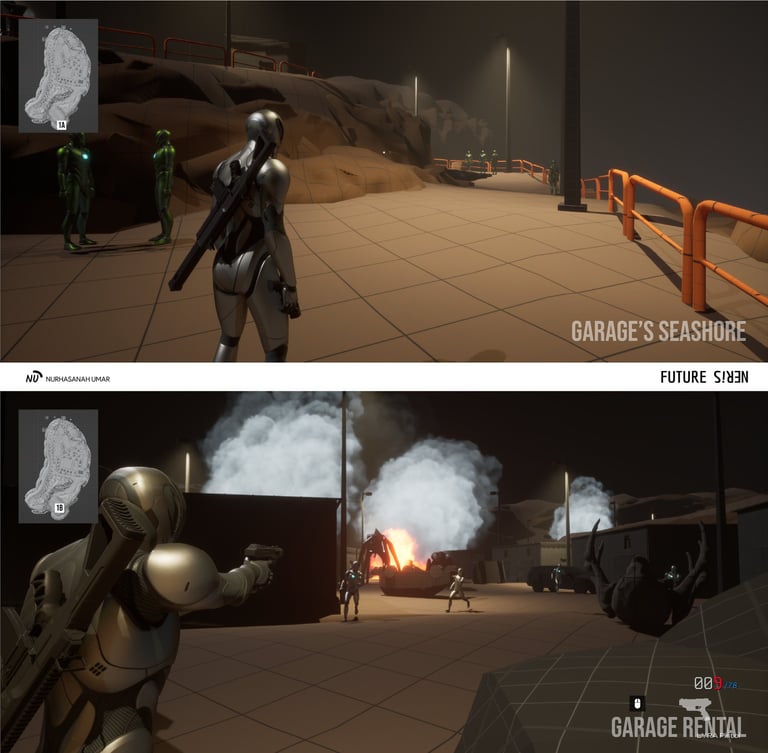

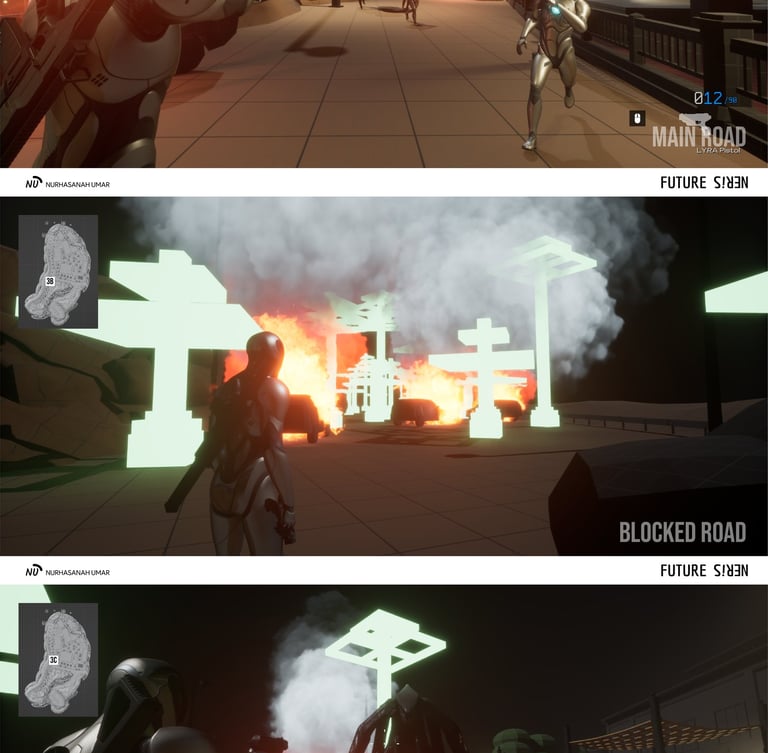
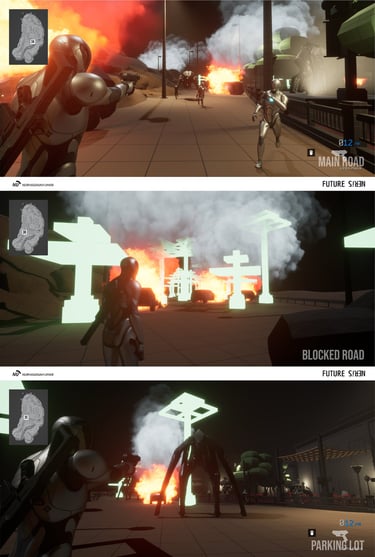
1A. Garage’s Seashore → Introduction of the player's character, story and its relation with Black Puddle, relations with NPCs, and the first Future Siren happens.
1B. Garage Rental → First encounter with the monsters, teaches shooting mechanics, player getting used to Future Siren, shows the player's characteristic as a leader.
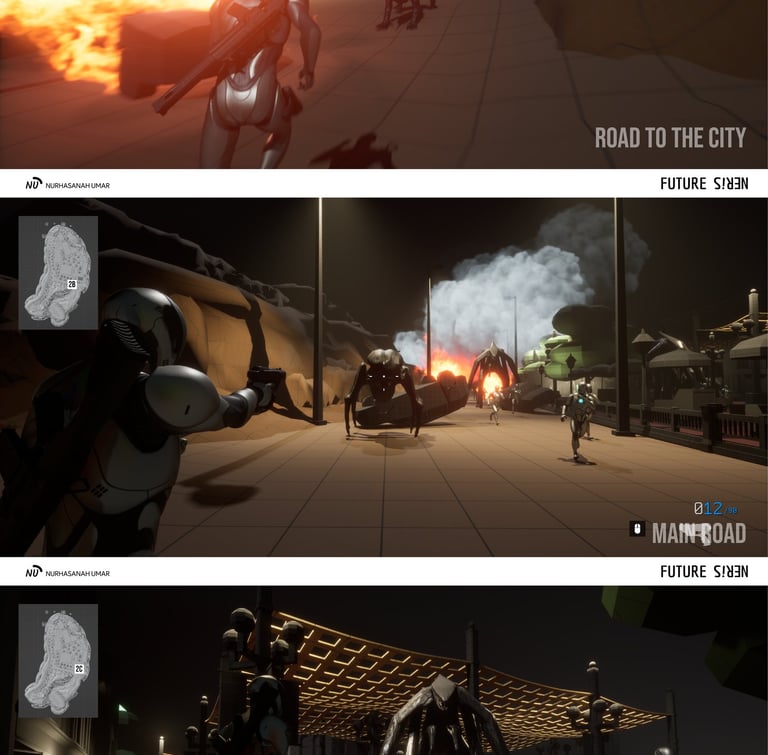
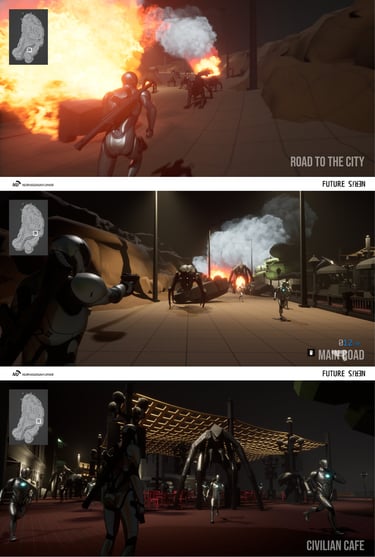
2A. Road to the City → The player learns fast run mechanic to escape between swarms of monsters, start the monsters killing count of human (Future Siren) that periodically increase overtime, intensify the tension to go to the city.
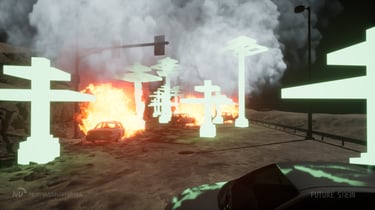
2B. (1A) Main Road → (1st branching) The player learns telekinesis by saving civilians inside a car, long narrow area for combat.
2C. (1B) Civilian Cafe → (1st branching ) The player learns telekinesis by saving kids from being thrown with props, wide area for combat.
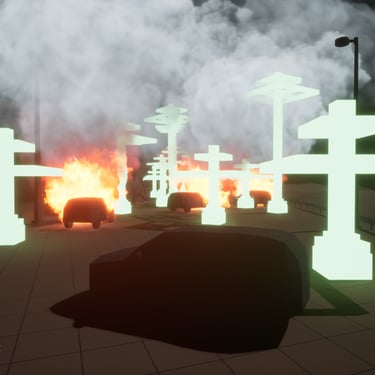
3A. (1A) Main Road → Continuation road to intensify the tension, encourage the player to use telekinesis using the surrounding rocks, first sight of glowing pillars from afar.
3B. (1A) Blocked Road → Discovers the glowing pillars and it's visual distortion effects, tells the team about it, realize the military backup won't come since the road is fully blocked.
3C. (1A) Parking Lot → Full combat space while avoiding glowing pillars, increased the difficulty without new monster variation.
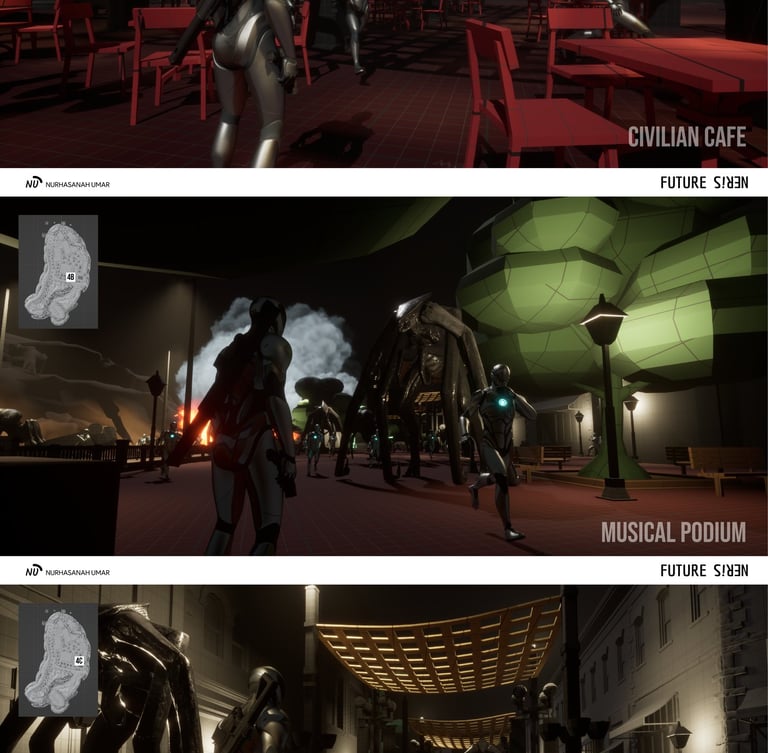

4A. (1B) Civilian Cafe → Encourages the player to use telekinesis since tables and chairs are all over the place, civilians running around increase the urgency to kill the monsters fast.
4B. (2A) Musical Podium → (2nd branching) The player kill monsters in the in the city area while able to see the road condition, balancing the visual narrative and combat gameplay.
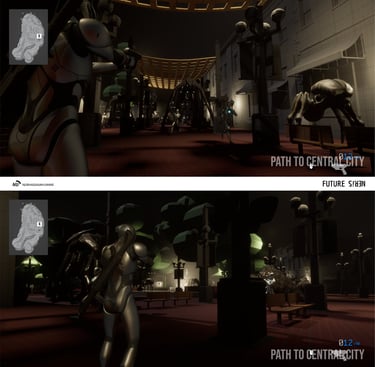
4C. (2B) Path to Central City → (2nd branching) The most combat challanging route since it has tons of monsters, but it directly connected to the central city so it's the fastest way and suitable for speedrunning in exchange of demanding fights.
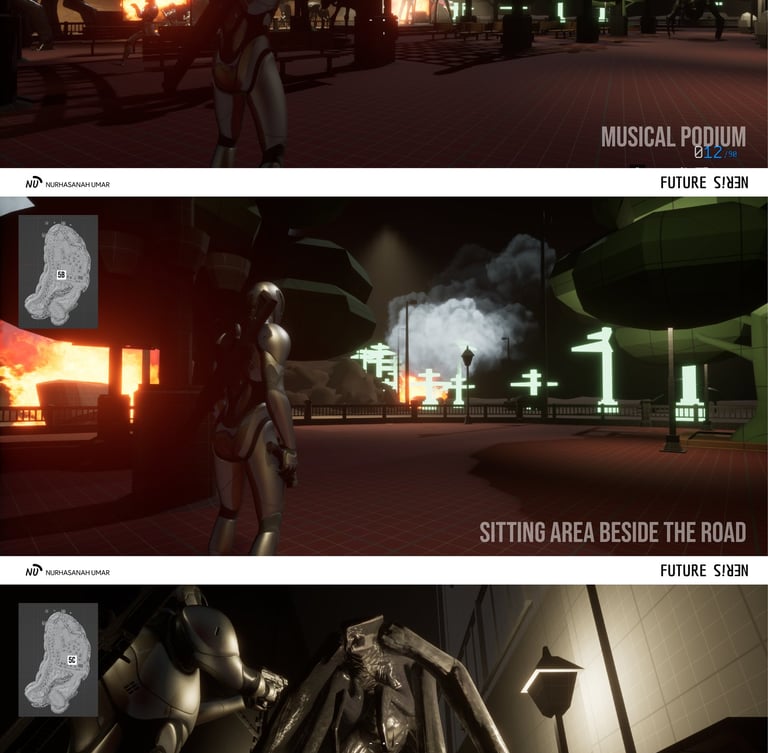
5A. (2A) Musical Podium → Continuation area, the player can see more chaos of the road mid fights against monsters in the city.
5B. (2A) Sitting Area Beside the Road → The player sees glowing pillars from afar but can't experience the visual distortion effect due to the distance limitations.
5C. (2A) Alley → Narrow area before entering the big area to help the teammates that asked for backup, increasing tension and the grand reveal of the central city area.
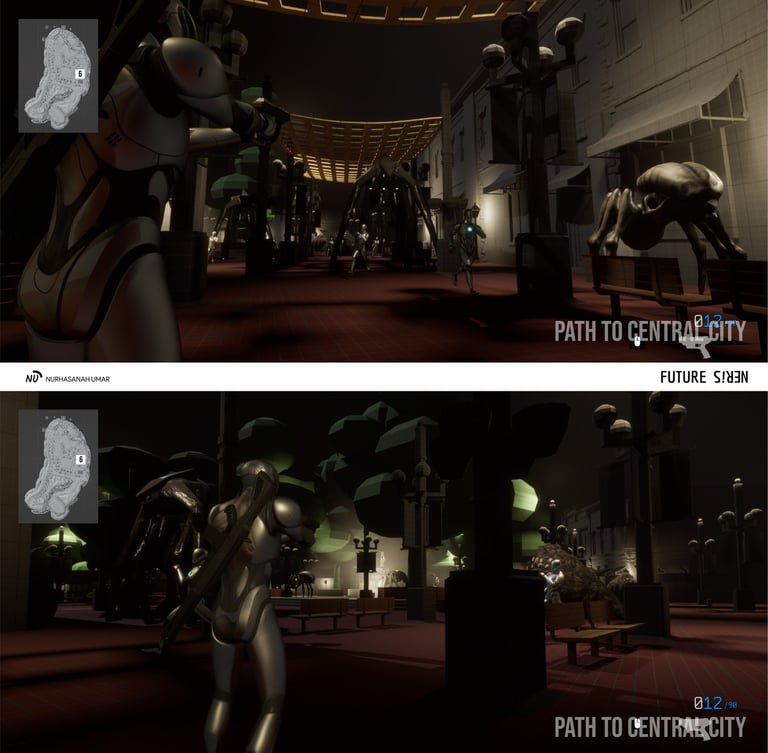
6. (2B) Path to Central City → Continuation area, tons of telekinesis props to that encorages aggresive gameplay, the player sees monster eating dead human (that's the reason why there's no dead body despite the continuous killing count of the Future Siren).
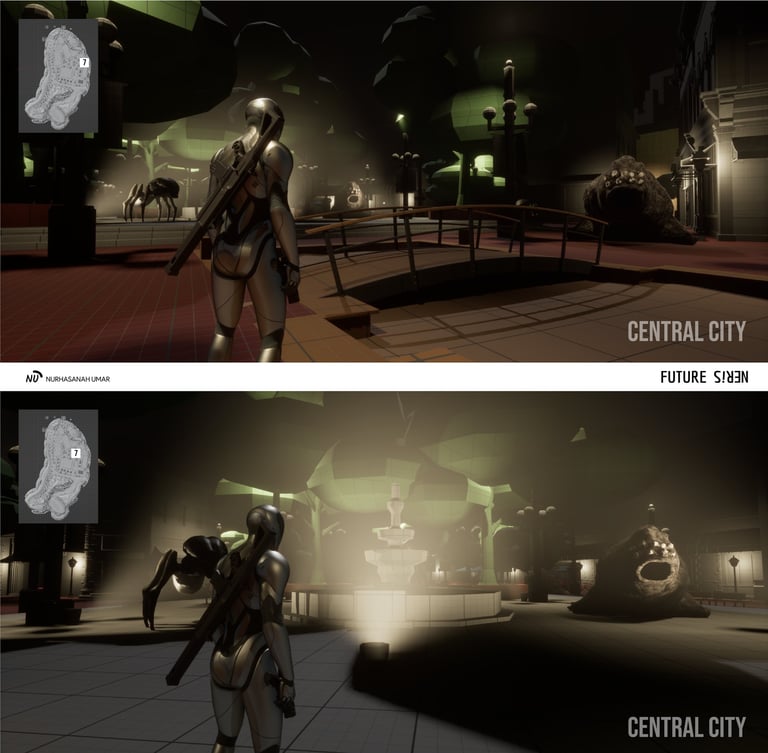
7. Central City → The biggest area where all branching routes will go into, one teammate die or not based on the chosen route, the player fight alongside other teammates, the kill countdown finished, the start of monsters' ritual preparation, the player must stop the ritual.
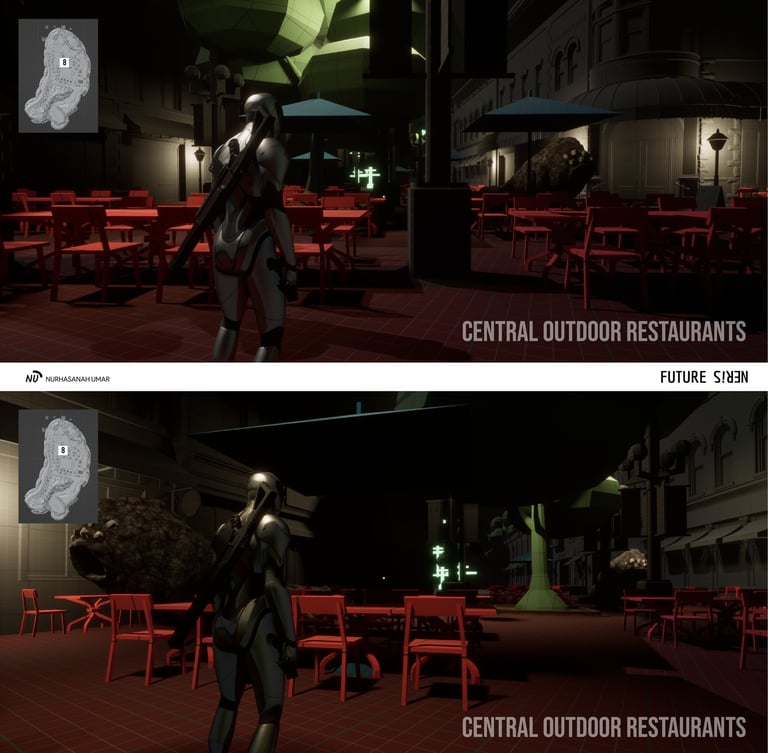
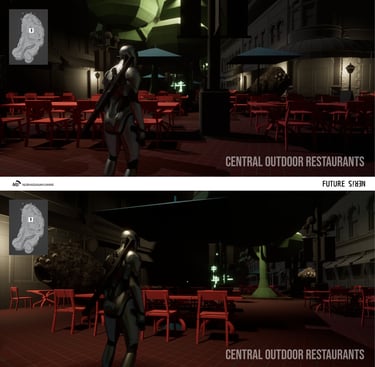
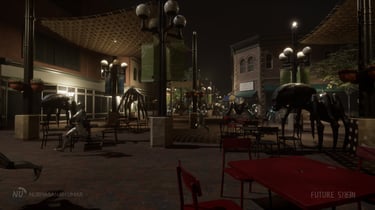
8. Central Outdoor Restaurants → Monsters comes through portals, peak telekinesis combat using the outdoor restaurant props, repetitive world transition, the start of ritual chanting using Bahasa Indonesia (the player still haven't undertand the language).
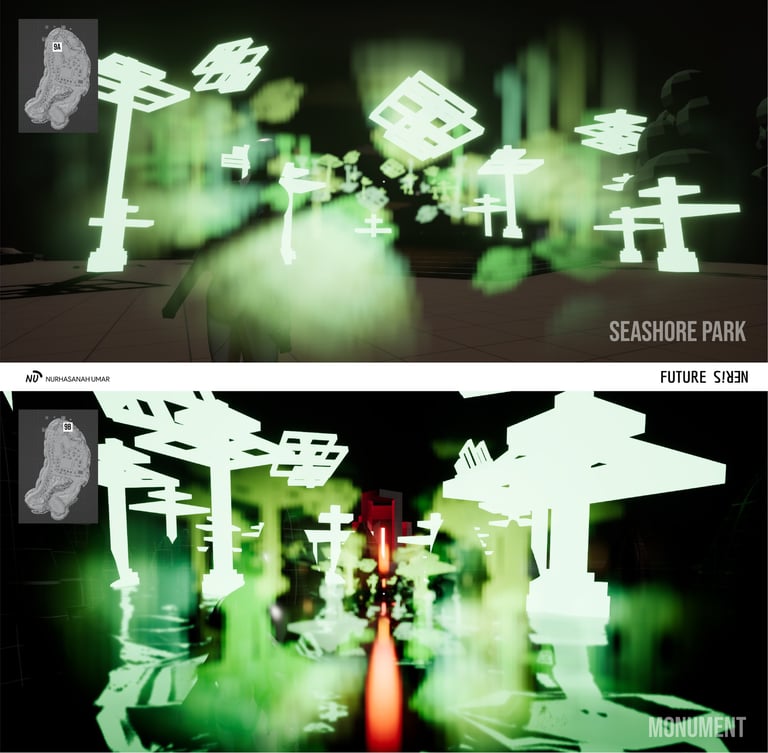
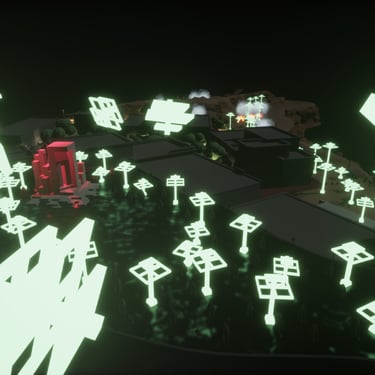
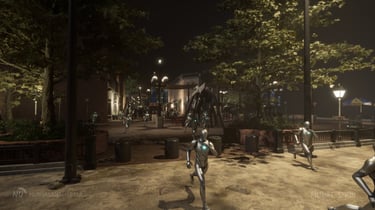
9A. Seashore Park → Navigate through glowing pillars while experiencing heavy visual distortion, see another variation of glowing pillars (flying), the player start to understand the Bahasa Indonesia chanting.
9B. The Monument → The player walks between Penyembah (chanting monster) and sea of Black Puddle to stop the ritual, peak chanting and the monsters' ritual phase, finale before blackout and cinematic scene as the end of Intro to Act 1.
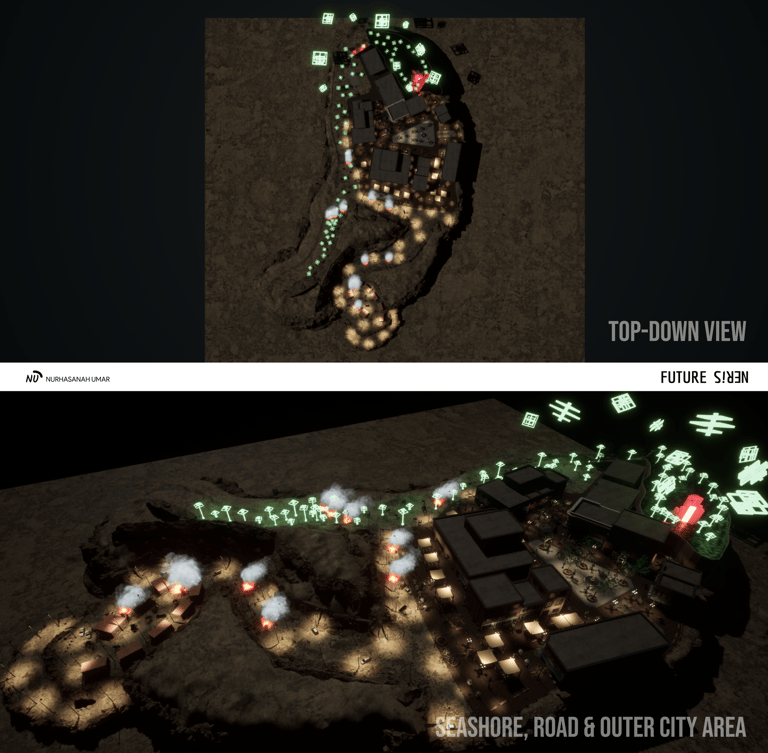
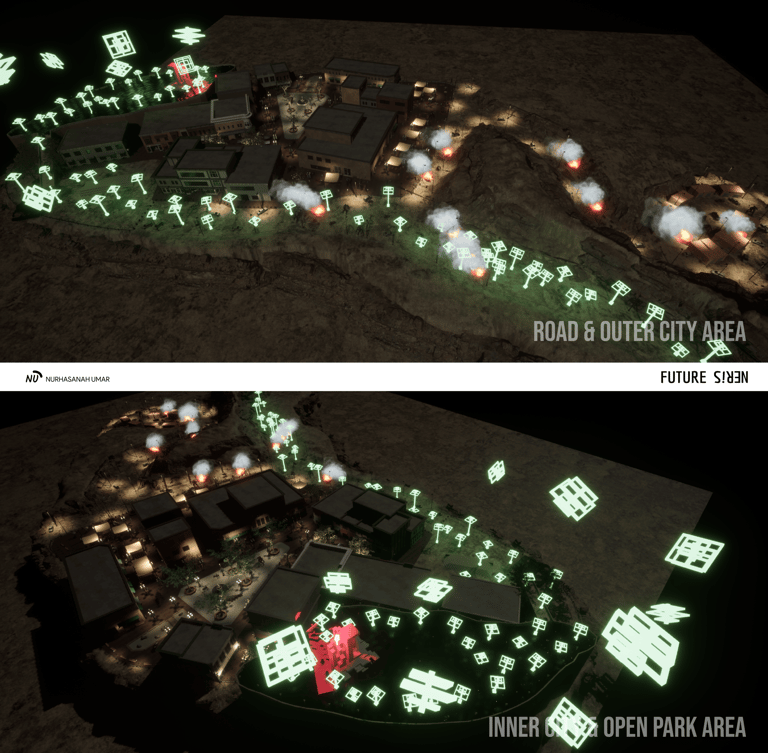
Top-Down View + Seashore, Road & Outer City Area
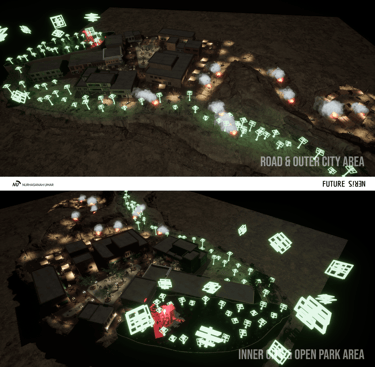
Road & Outer City Area + Inner City & Open Park Area
blockout Render


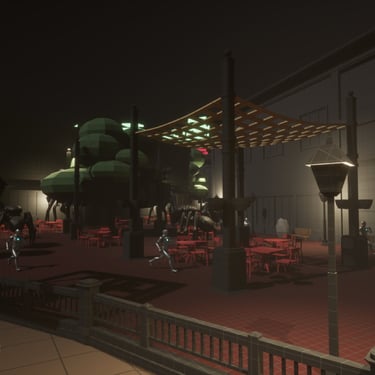

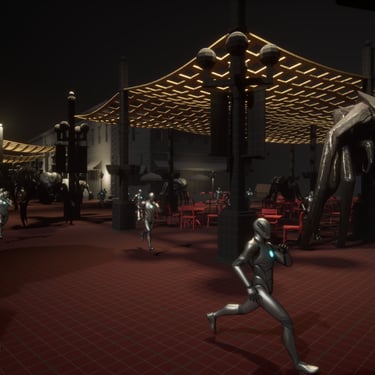
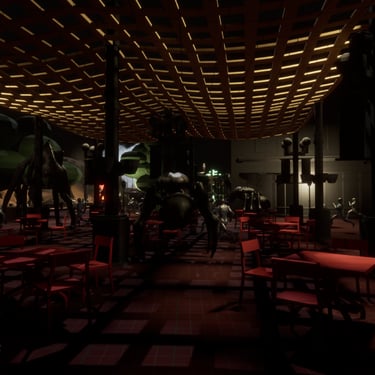

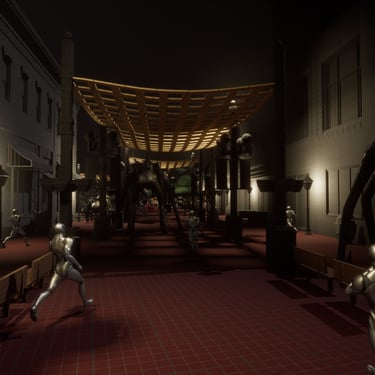
Cinematic Render
One Pager

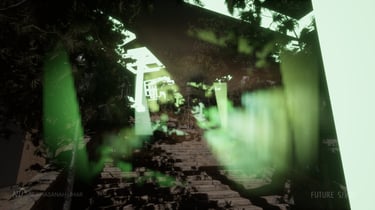
Playthrough (art pass)
Final Blockout

Things I’ve Learned
In a shooting/combat-focused level, the navigation space must properly accommodate all movement mechanics so the sizing feels right. If it's done wrong, it'll break the immersion since it won't be comfortable when the player is moving through areas.
Accuracy is key to making a proportionate-sized level, but it doesn't mean everything must be the same as IRL dimensions. UE5 uses a camera POV that differs from how our eyes see the world, so playtest and iterate a lot to make sure each 3D aspect has adequate scale between one another.
Branching route = distinctive gameplay in each route—which is highly affected by the narrative and discoveries. In combative level design, it means designing areas with different exploration paths, environment styles, landmarks, and various combat difficulties to balance with the story progressions.
Creating lots of areas means expanding the level map size, so keeping track of everything is essential to make sure they all align with the intended level, difficulties and tension progression, and the visual style. Categorizing based on certain aspects (area zone, combat type, etc.) helps a lot.
Civilized places that are built around nature tend to have more organic layouts since they adapt to the surrounding terrain. So, we can create the nature first, then the human-made places later to make them feel more natural. Google Maps has a 3D terrain view that helps with this kind of workflow.
Complex navigation flow will frustrate the player. So, if the area is not intentionally designed to confuse them (maze, puzzle, etc.), make sure it's easy to navigate to avoid any disorientation. Creating interconnected areas also helps to make certain places easy to access from anywhere.
Resources
Third Person Shooter Kit by Soriox: https://youtu.be/BJlk0ha_FsM?si=juErAVGXFM7ZeBoH
Control Telekinesis Mechanic by Lucid Tales: https://youtu.be/reaPAejLtyE?si=IqKoYhB1jinHCpfv
Downtown West Modular Pack: https://fab.com/s/be5ea9a2cae4
City Sample Vehicles: https://fab.com/s/62cf08ebaf2e
M5 VFX Vol 2. Fire and Flames (Niagara): https://fab.com/s/2b919185c054
Bio Hound Free low-poly 3D model: https://www.cgtrader.com/free-3d-models/character/sci-fi-character/bio-hound
MONSTER creature Free 3D model: https://www.cgtrader.com/free-3d-models/animals/other/monster-298ca489-e820-41f0-8752-12ac861c696a
Skeletal Horror Spider Free low-poly 3D model: https://www.cgtrader.com/free-3d-models/animals/insect/low-poly-skeletal-horror-spider
Female Muto Free 3D model: https://www.cgtrader.com/free-3d-models/animals/other/female-muto
Other assets and materials: Quixel Bridge, Unreal Marketplace
Audios: Epidemic Sound
© 2025 Nurhasanah Umar. All rights reserved.