
LD: Snow Church
Detective, Story-Rich, Suspense, Drama
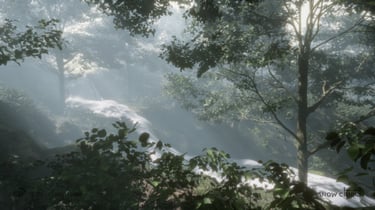
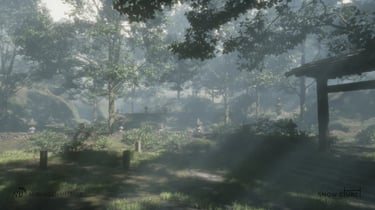
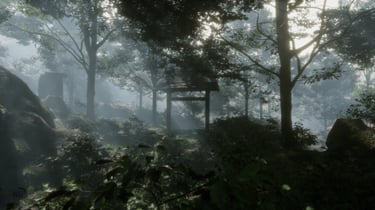
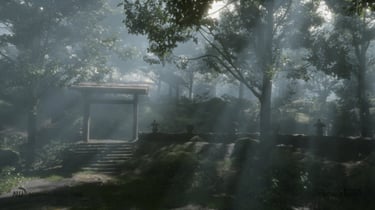
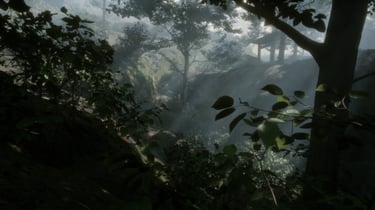
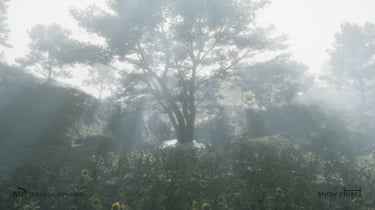

Notes:
This level design project was made streamlined as the game writing of Snow Church was made, so the changes from the game writing immediately affect the workflow and the level design progress.
The final output of this project was a prototype phase, mainly focused on narrative, level design, environment design, and light design aspects. The programming side was not the priority.


At its core, this was a fan project spin-off of Control by Remedy Entertainment, so every aspect must follow Remedy's style to create a feeling of continuation. This project was also inspired by Detroit: Become Human, Alan Wake II, and What Remains of Edith Finch, so the level design must accommodate heavy storytelling with big exploration areas that’ll lead the player to experience flashback visuals/gameplay.
Game Inspiration
Real-Life Research about Nature Area
Input: Pinterest pictures, Google images
Output: type of natural areas with a lot of trees, size different between the areas, variety of biomes in different areas
(Some) Notes:
Unlike human-made places, natural places tend to be more chaotic and unstructured, especially if they’re not used a lot by humans.
It needs a lot of layered vegetation to make a nature area feel natural.
Areas that have more visible elevated ground usually use rocks to separate the higher ground and the normal one, the seamless elevation tends to happen in bigger areas like grass fields.
Available Assets for Unreal
Input: free assets at Unreal Marketplace & Quixel Bridge
Output: list of assets that can be used, the possible nature theme from the available assets, and limitations for making the level & narrative
(Some) Notes:
There are tons of natural asset collections, but the only available 3D models of the trees are the European ones.
There are a lot of outdoor things that can be used, so it’s not a fully ‘natural’ area.
The assets tend to have different color schemes, so it’ll need some adjustment when using it on the final version.
Research Phase
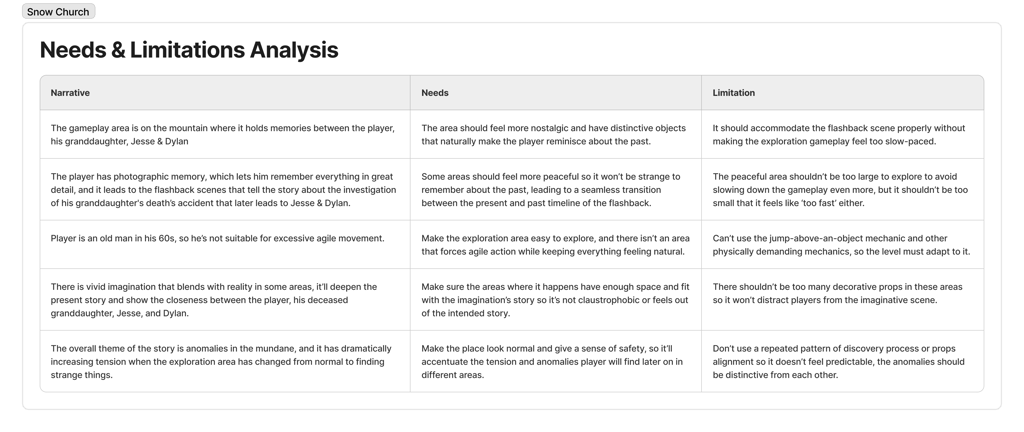
Level Design Scope
This project was narrative-heavy and must create sentimental feeling when progressing through the gameplay, so making sure the level design's scope and direction aligned with the narrative was mandatory.
The data from game writing and research phase gave an overview of the narrative, nature's characteristics, and available assets. So, I converted them into technical guidelines that would be used on the level development.
Based on the game writing concept, 'reliving the past' became a key aspect for this project. That was why this level was designed to be a place to trigger the player to tells stories from his past.
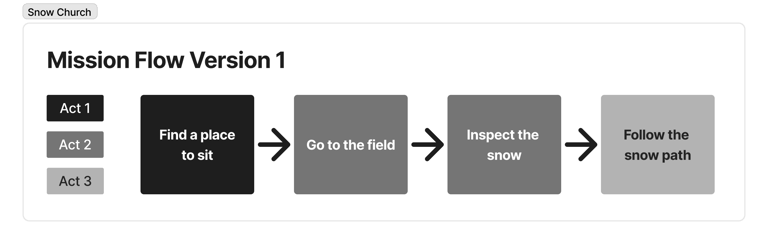
So, the trigger actions needs to be something that reminds him about things that happened in this place a long time ago. That was why the missions were simple since it was an old man doing things that he did and it made him being nostalgic enough to talk to himself.
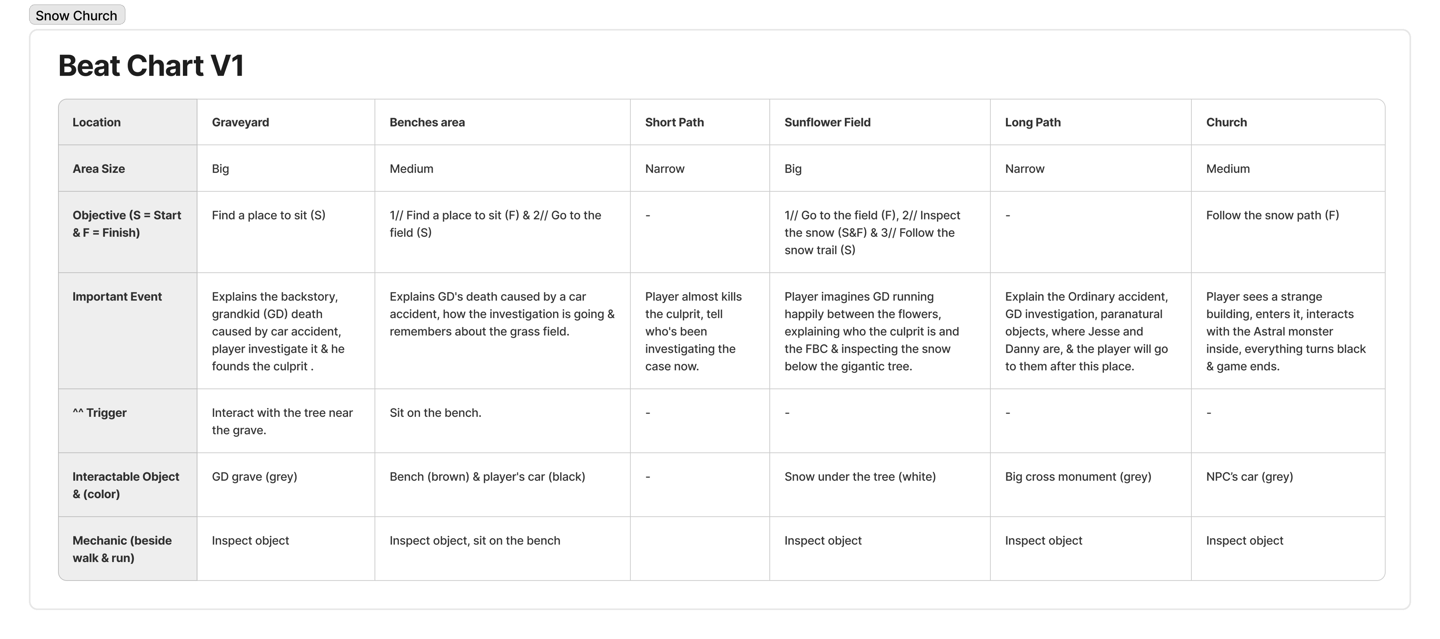
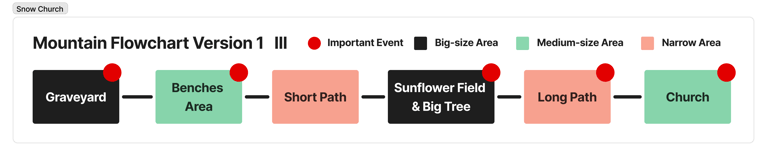
This first flowchart was fully focused on facilitating the narrative, so there weren't any additional explorable areas to prevent messing up the emotional buildup from the story. This ensured streamlined development between the story and level design.
I also made the areas have different sizes to give different exploration scopes. It helped to build tension from the narrative, since the connecting paths (short and long paths) were narrow, so it created a grandiose revealment when the player reached the key areas of the level (sunflower field and churchyard).
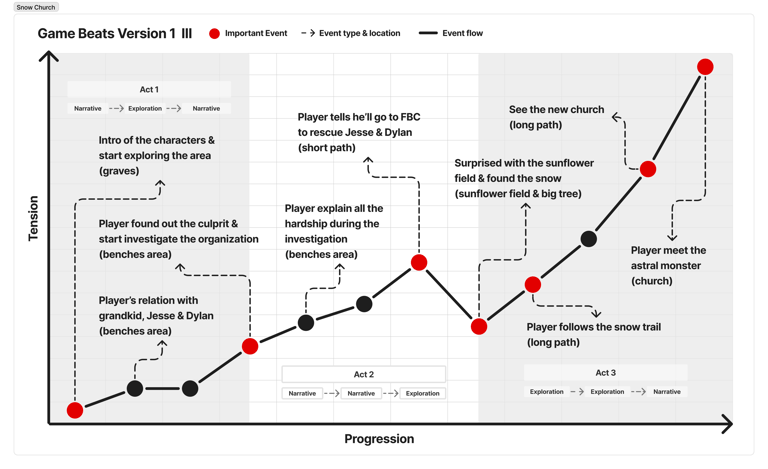
There won't be any flashback scene since how the stories from the past got revealed was through the player's monologue storytelling that would happen when he interacts with certain objects in the level.
So, the game beats were designed to inform everything the player does in the mountain and "what kind of stories the player will talk about in this area."
Mission Flow V1
Game Beats V1
Area Flowchart V1
Beat Chart V1
Low-Poly Props PT.1
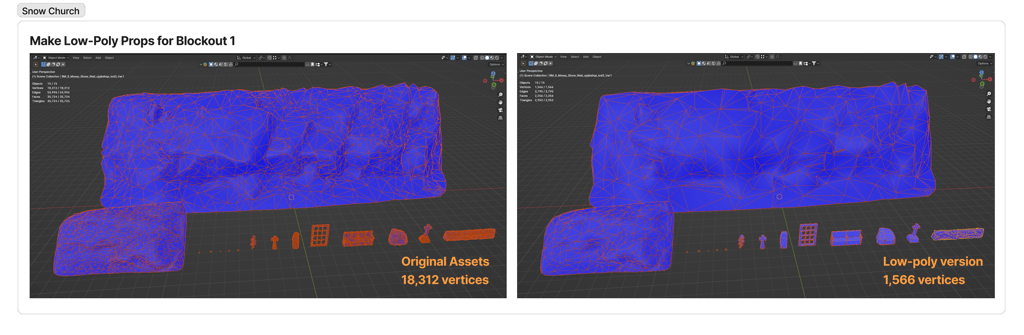
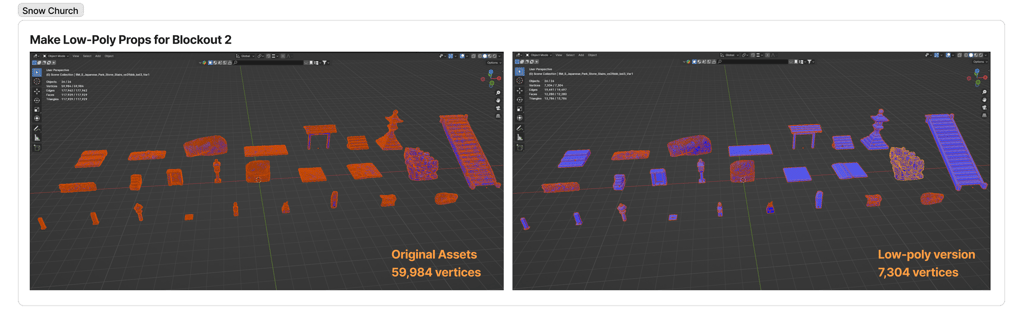
I made low-poly .fbx assets from the game-ready assets in Blender. To shorten the duration of 3D modelling, I focused on making the non-organic objects (graves, benches, etc.). For organic ones, I used the final assets but assigned world grid materials so it doesn't distract focus inside the blockout phase.
Blockout & Polishing V1
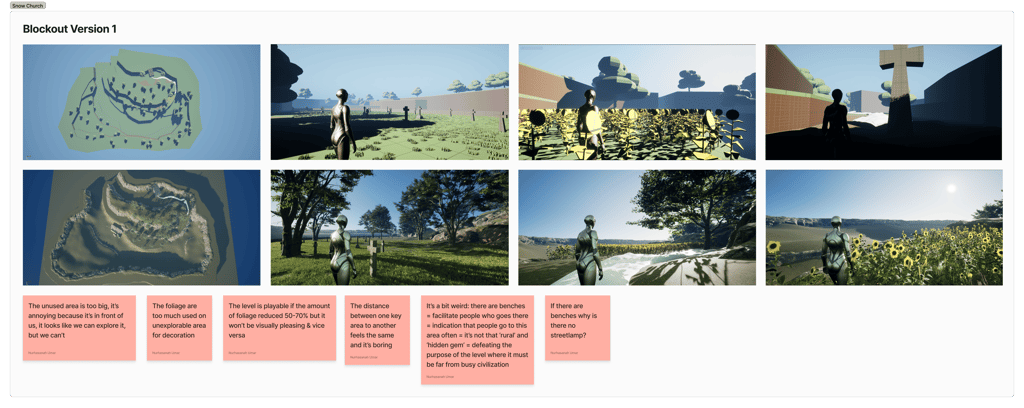
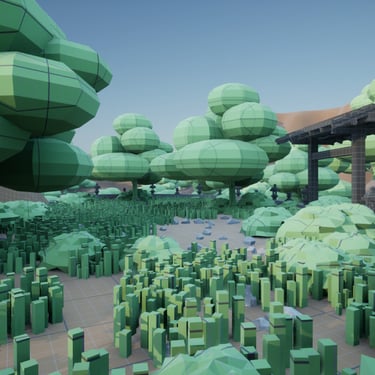
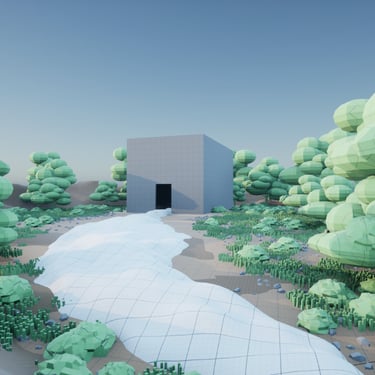
I focused on making the area big and peaceful to emphasize ‘the world is big, and we’re just humans trying to explore it’ feeling, so I used an open grassland in a valley theme.
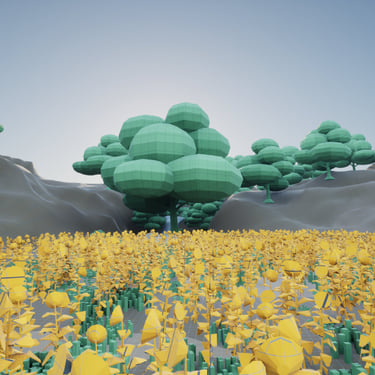
The key areas, the sunflower field and the church, were purposely made to be enormous to increase the visual memorability of nature. In contrast, the usage of human-made objects was minimized to accentuate the natural feeling.
After the blockout was finished, I polished them using the game-ready assets to capture the emotional feeling of the environment. The result? Problems (see the sticky notes).
The key problem was the ineffective foliage usage. Since it was an open area, it needed tons of decorative foliage, even in unexplorable spaces, to achieve the lush mountain ambience. Even though I used Nanite, it was still too heavy and caused my PC to crash multiple times. That was when I knew this blockout was unusable, and I had to reduce the foliage usage.
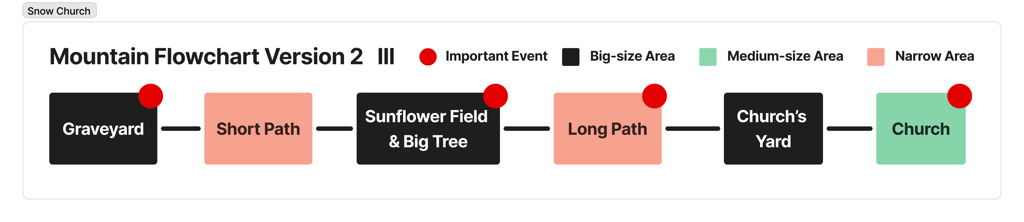
The story and narrative aspects were already well-executed, so the changes were focused on the level design to enhance the exploration experience of the level. I reduced the number of unexplorable decorative areas in exchange for making one additional area (church's yard) in a big-sized area.
Area Flowchart V2
Blockout & Polishing V2
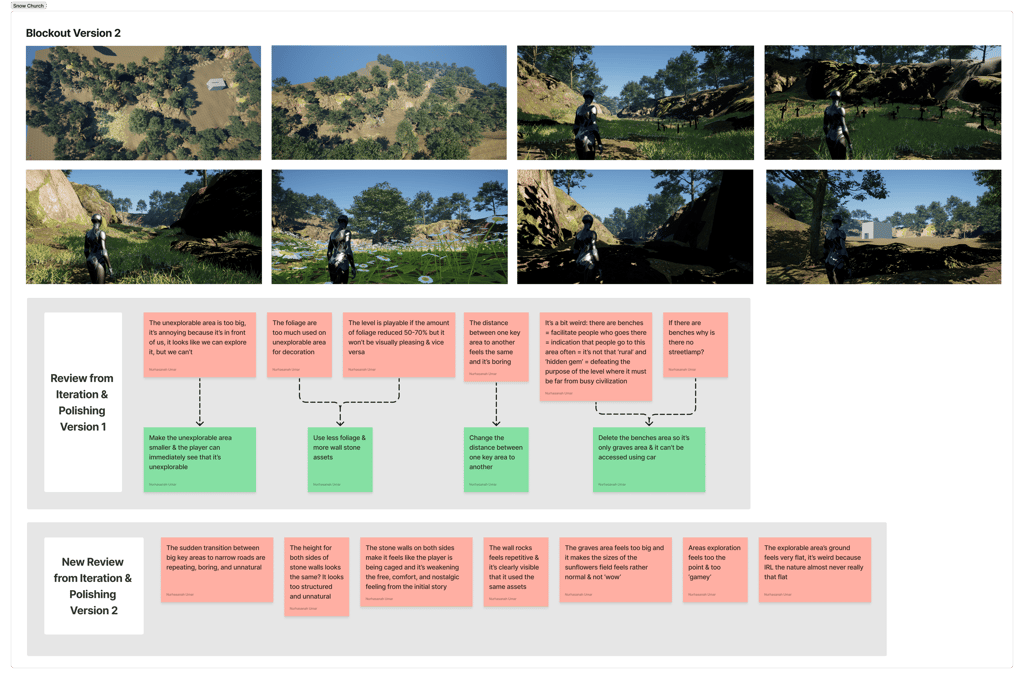
To decrease the foliage usage, I created the second blockout with a different theme: a mossy valley surrounded by higher ground. It led me to use rock walls as area boundaries and only added necessary foliage between the walls—keeping the level visually pleasing while reducing the foliage usage.
It worked well. The foliage count got reduced by a huge margin. My PC didn't crash. I even added god ray effects to deepen the mood, and the performance was stable at 120 FPS.
But new problems arose (see the second red sticky note row). This time, the main problem was the exploration experience felt too flat.
The explorable areas were flat without any ground height variations. It made the navigation feel like a walking simulator, where we must find a way out from this place. It was a complete opposite of the intended nostalgic feeling.
The narrative changed a lot. Now, there would be flashback scenes instead of only telling it through the monologue storytelling.
The way to trigger the nostalgia and flashbacks also got adjusted. Instead of only interacting with certain objects, those scenes would also happen when the player passed through certain areas of the level. It would trigger the player's curiosity to explore deeper into the mountain to uncover more stories and naturally make them engage with the environment.
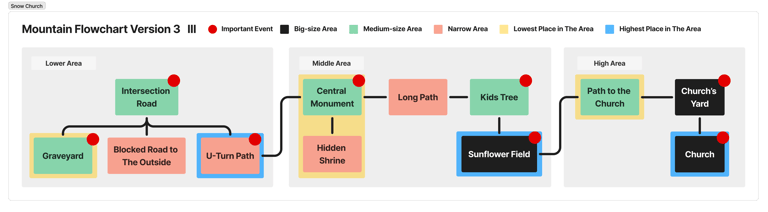
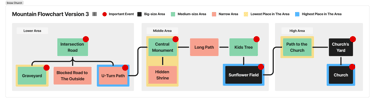
Rather than organize the areas based on their usage like human-made buildings, I organized them based on the ground height to deepen the mountain ambience.
The narrative also went through complete rewriting, so the area flowchart adapted with it. It wasn't a problem because this update made the exploration experience feel more natural since the IRL mountains tend to be big and have lots of interconnected areas.
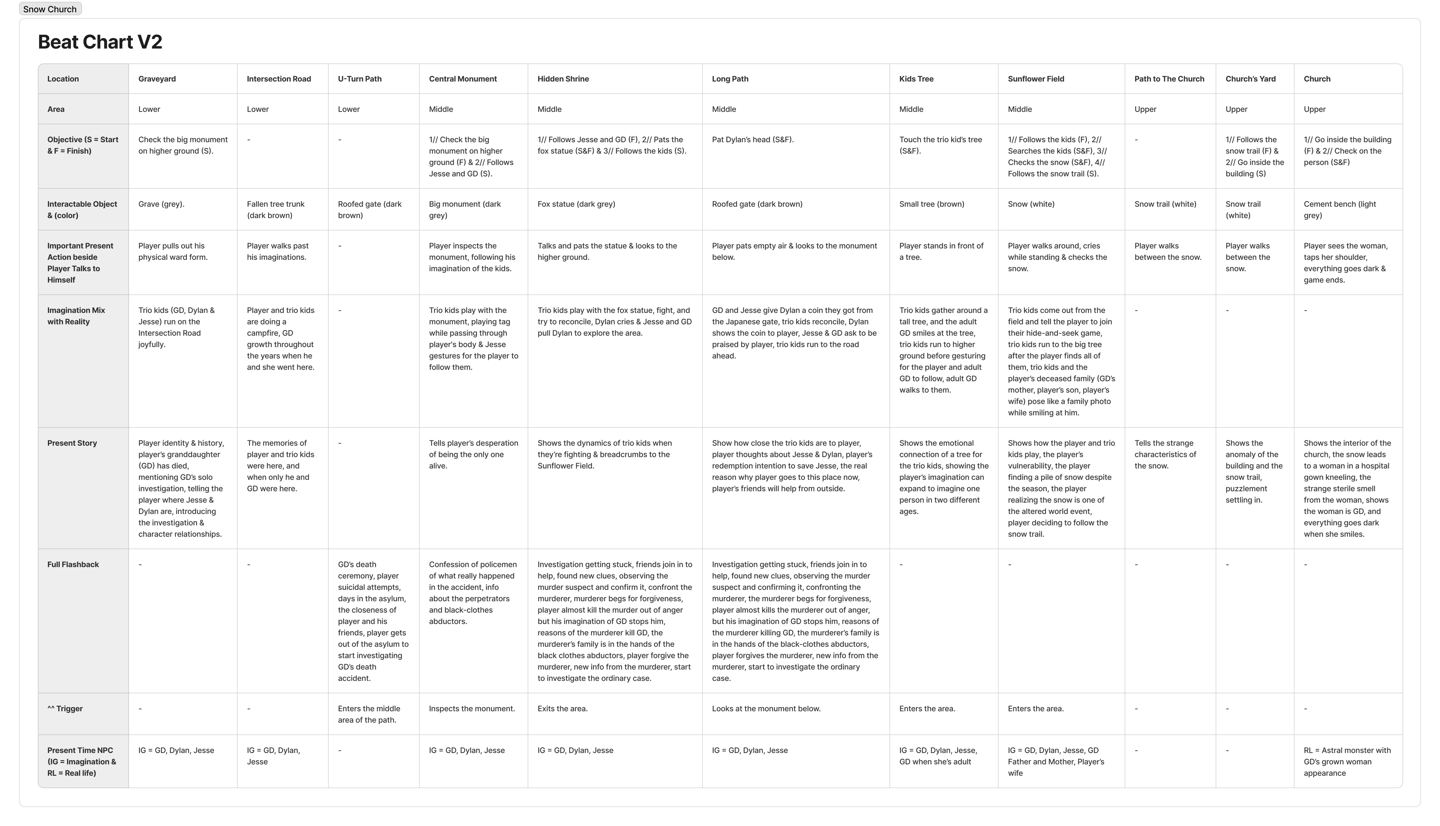
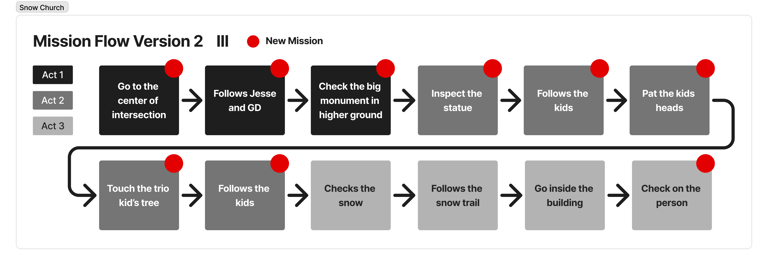
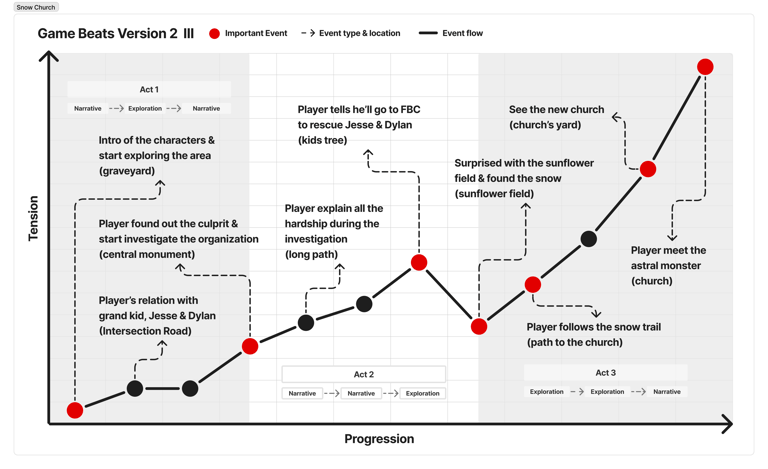
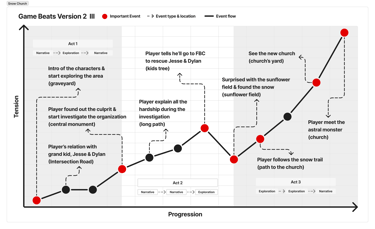
The massive revision happened inside the screenplay, so there weren't a lot of changes for the level design aspect. So, the changes in this game beats were for where the events happened in the new area flowchart.
Mission Flow V2
Game Beats V2
Area Flowchart V3
Beat Chart V2
Top-Down Sketches
Since exploration sketches are the fastest way to explore and optimize layouts, I did it before the 3rd blockout to prevent uninteresting layouts like the 1st and 2nd blockouts.
I also learned from Black Puddle and Future Siren projects that the best way to make an interesting layout was to playtest it in UE5 repeatedly. So, I focused on making 15 high-quality sketches with detailed area separation. This method prevented me from getting too focused on the planning-until-it’s-perfect loop.
After that, I imagined the 3D version inside my head and analyzed them on three aspects: how suitable the layout was with the level intention, exploration possibilities, and uniqueness.
At the end of it, three sketches were chosen to be made into blockouts inside UE5.


Low-Poly Props PT.2
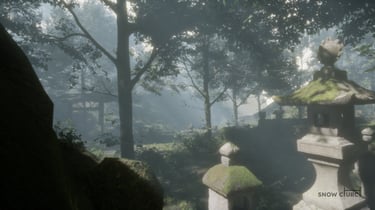
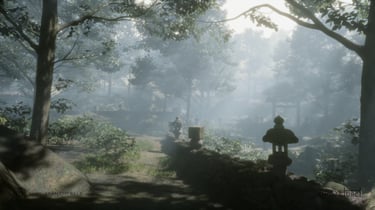
When I browsed through the Quixel Bridge, I found out there were lots of old Japanese shrine assets. Seeing this potential, I immediately did research about this theme and realized it could enrich the cinematic aspect of the level.
So, I decided to use it. I made new low-poly assets from them. But, because there was no Japanese tree asset available, I decided to use the available tree to make up for it.
Blockout & Polishing V3
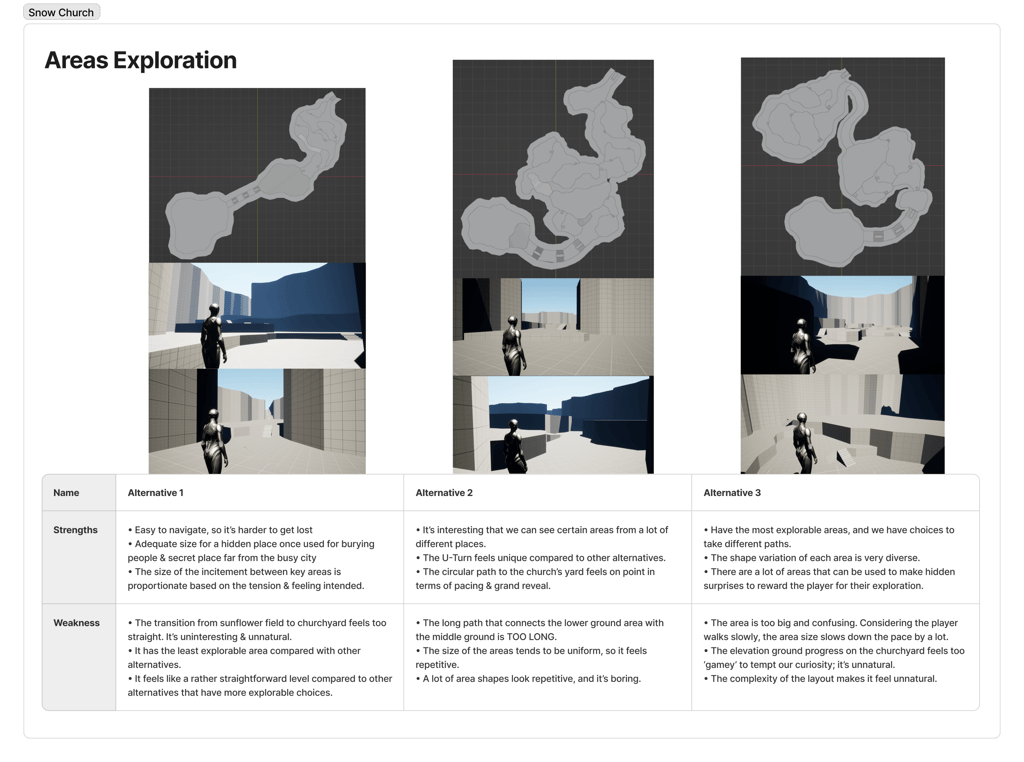
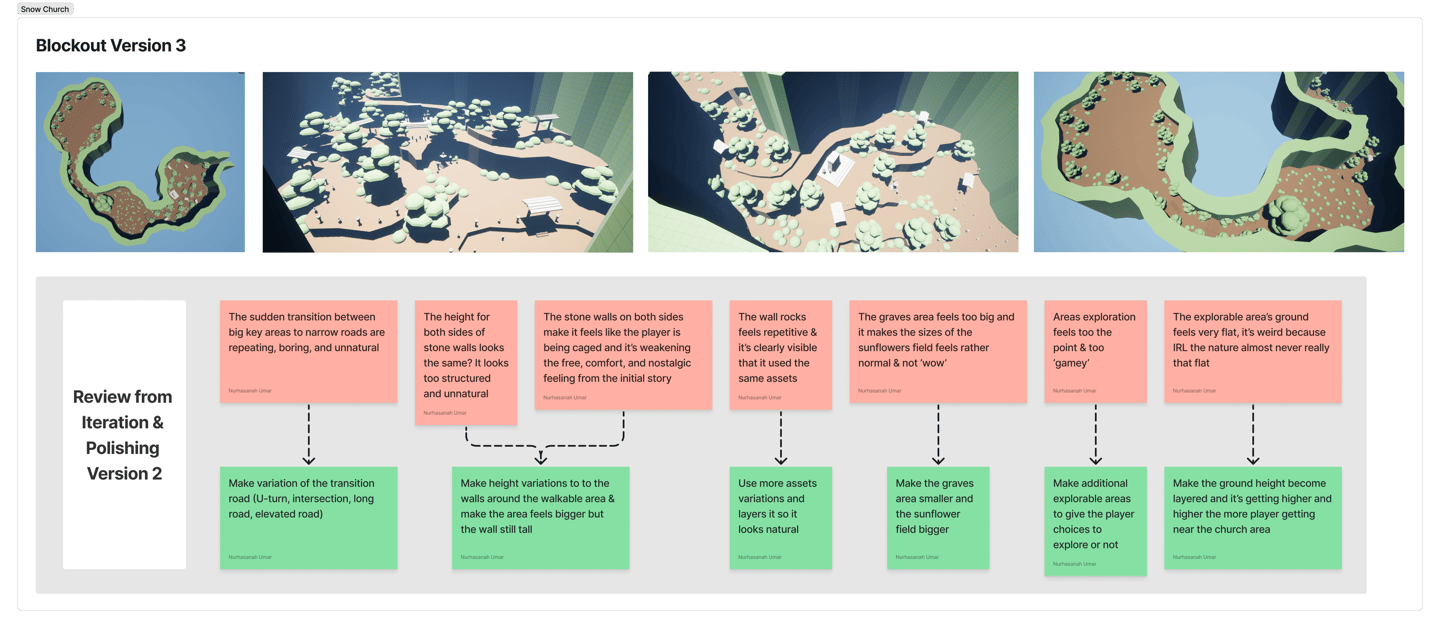
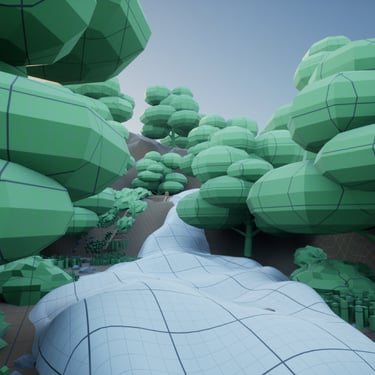
The potential of alternatives 1 and 2 led me to combine both of them into a new layout. The lower and middle areas were from alt 1 since this map had the most natural ground elevation and was the most intuitive to navigate.
While the higher area came from alt 2 because it gave the most majestic revealment when we climbed up the stairs on a narrow path and spotted a big church on a big open space.
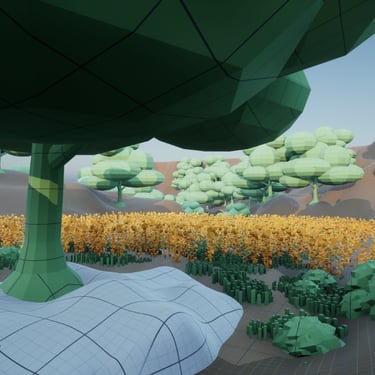
I created blockouts from the three chosen sketches and analyzed each of them to decide the final blockout. I focused on playtesting the navigation and exploration experience, so I didn't add any props to avoid visual distraction.
Each of them has different strengths and weaknesses. After some thorough analysis, I realized too many exploration possibilities weren't ideal since they can distract the player from the missions and narrative.
It was crucial since this project wasn't a walking simulator. That was why alternative 3 can’t be chosen as the final design.
Feedback session
There were four respondents at the feedback phase, each from a different specialty background. I hosted the interviews one at a time and asked different kinds of questions based on their areas of expertise, so the result was more accurate. I used their input to refine the level, and asked them to rank this project based on their area of expertise. The picture above is the rank of it.


Final output Breakdown
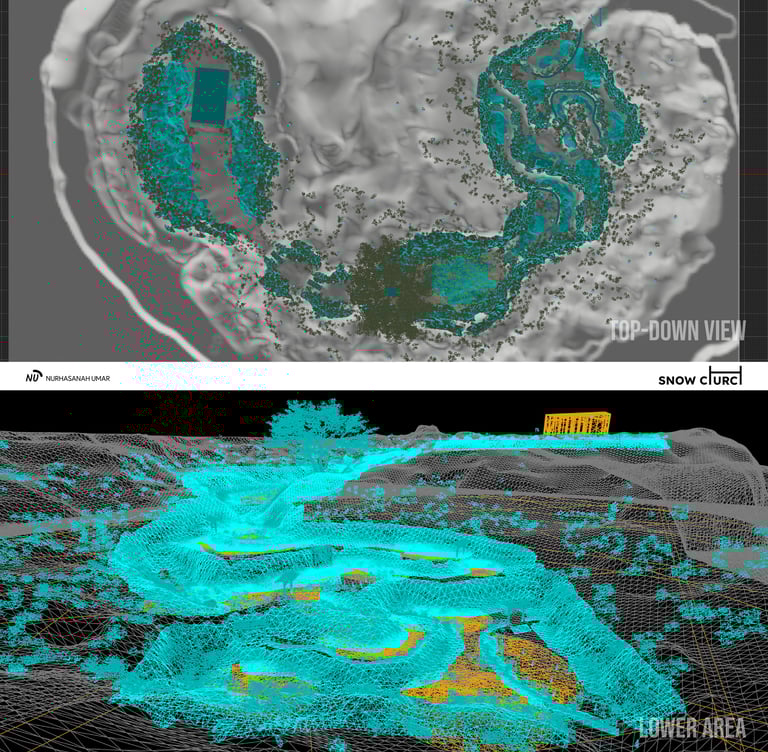
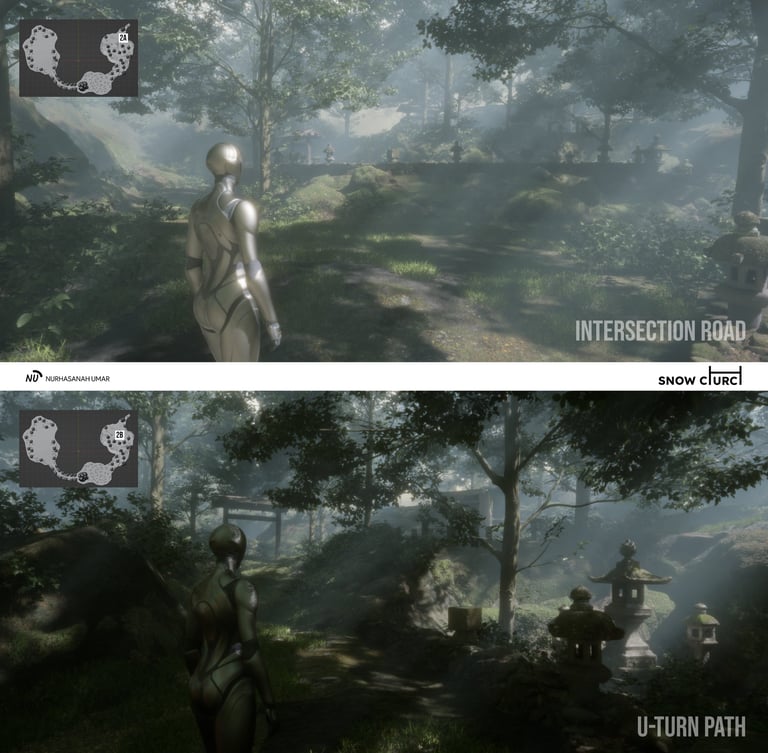
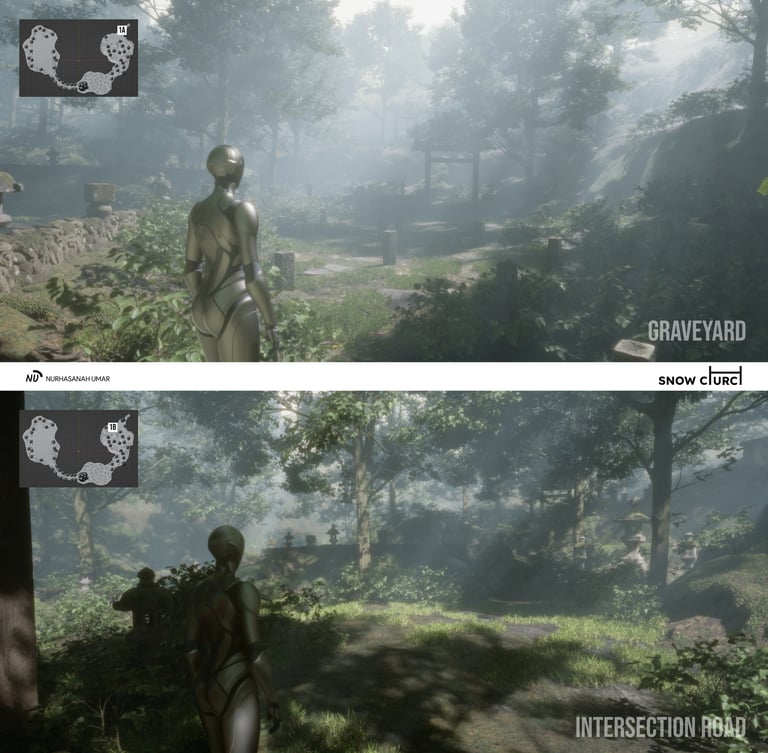
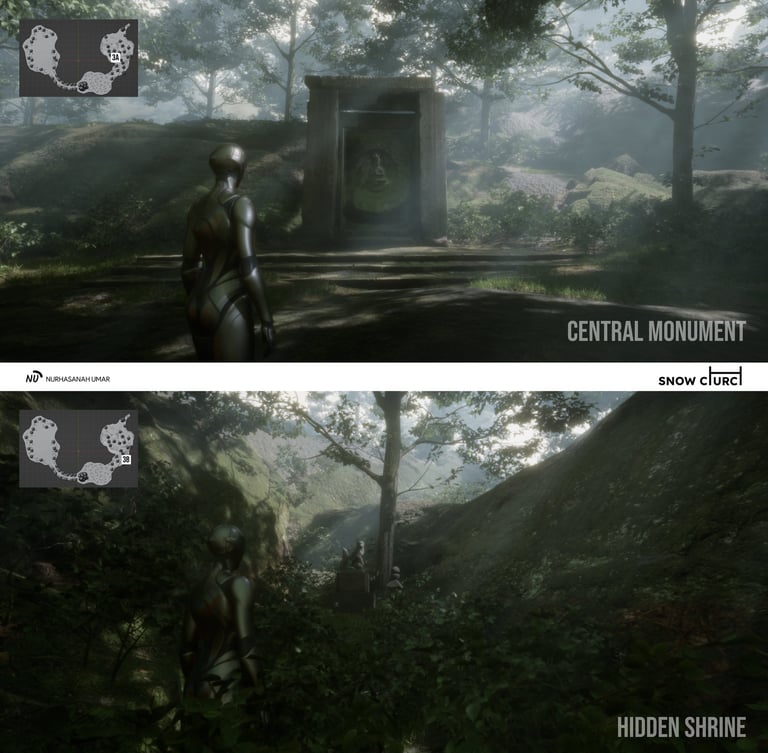
1A. Graveyard → Introduce the mountain area, player's backstories, granddaughter who died years ago, player's ability to imagine things realistically that it blends with reality (trio kids), and the current player's situation.
1B. Intersection Road → Encourage interaction with the small shrine to teach the main gameplay mechanic.
2A. Intersection Road → Adapt the player to the imagination that blends with reality. The player can interact with a tree trunk that block the exit.
2B. U-Turn Path → Transition road between the lower and middle mountain areas symbolized the player is walking towards the future (higher ground), but his mind kept staying in the past (seeing the lower ground & full flashback).
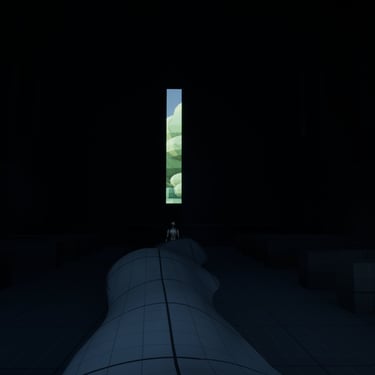
3A. Central Monument → First interaction between the imagination and the player's physical body. Cinematic reveals of the central monument.
3B. Hidden Shrine → Shows the relationship dynamics between the trio kids (player's deceased granddaughter, Jesse & Dylan) and how the player remembers everything about them since they're important in his life.
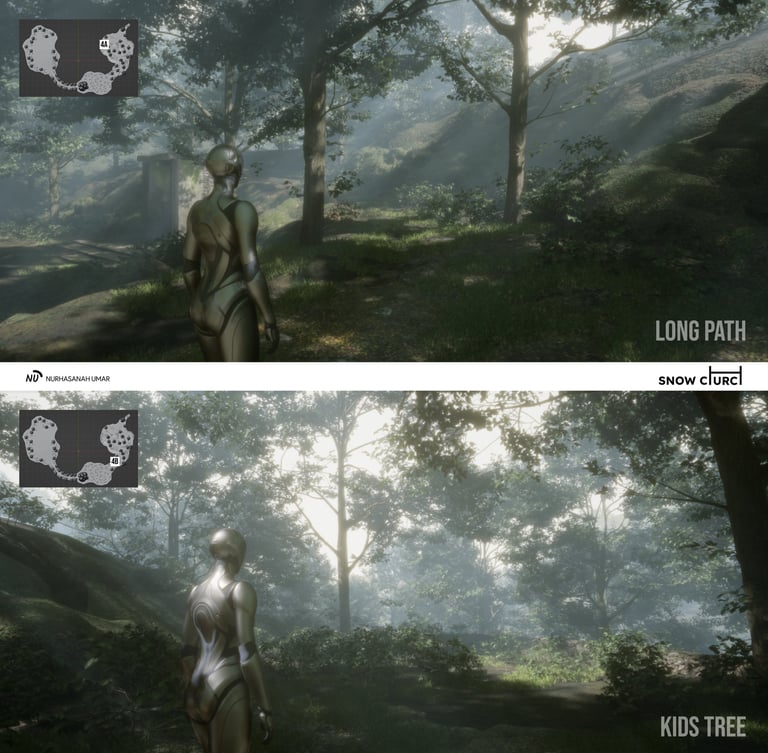
4A. Long Path → Shows how the trio kids also treat the player as someone important through the player's imagination of the past.
4B. Kids Tree → A normal tree area to amplify the majestic transition into the sunflower field. The imagination of adult version of granddaughter interacts with the trio kids and leads the player into the sunflower field—symbolizing every living being will grow, but some feelings won't change.
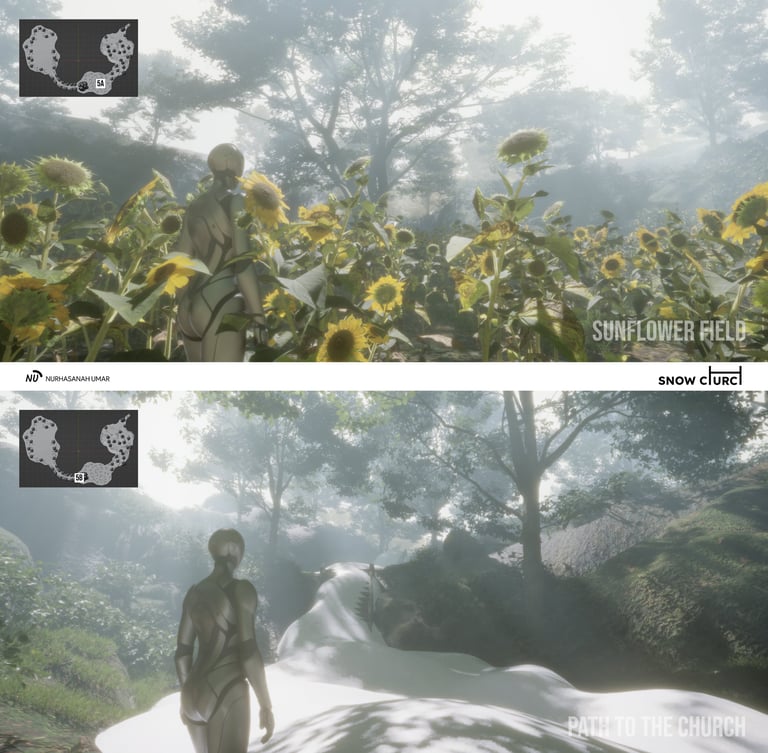
5A. Sunflower Field → The adult granddaughter shows the field, the player and trio of kids play hide-and-seek, the player imagines his late family talk to him, the player finds snow under the big tree and follows its trail.
5B. Path to The Church → Transition area before the player reaches the mountain's peak, focus on building tension & anticipation from following the snow trail.
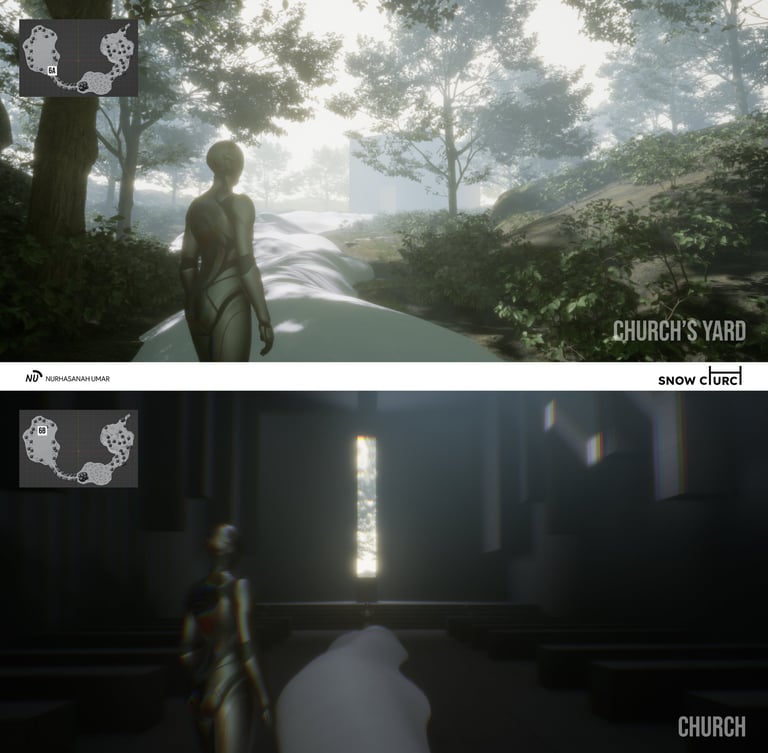
6A. Church’s Yard → A big yard that suddenly has a big brutalist church, but there's no trace of building it. Cinematically revealed, shows the snow trail going into the chuch.
6B. Church → Brutalism-style church to connect the visual aesthetic with the FBC building from Control, focusing on highlighting the woman in a hospital gown (astral monster) that is identical to the deceased adult granddaughter.
Top-Down View & Lower Area
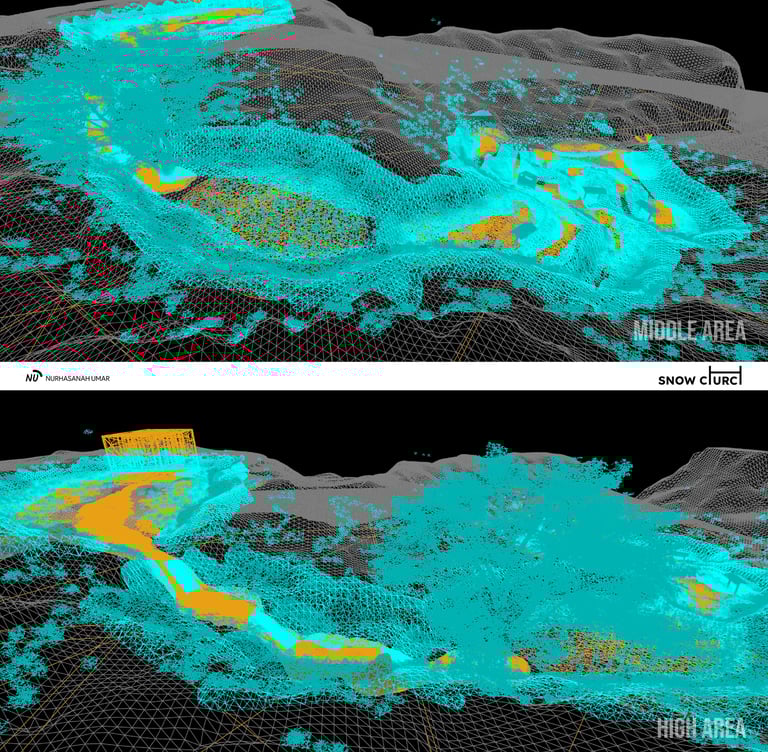
Middle Area & High Area
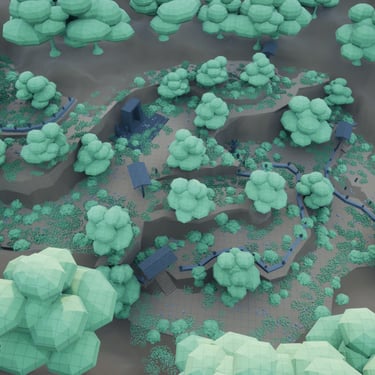
Blockout Render
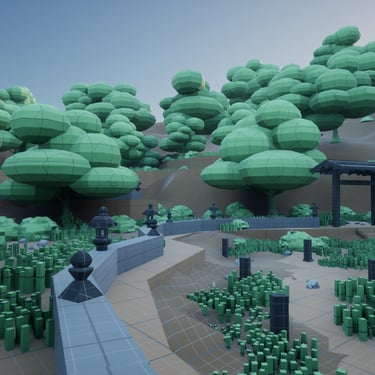
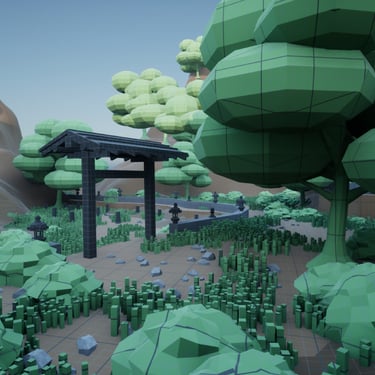
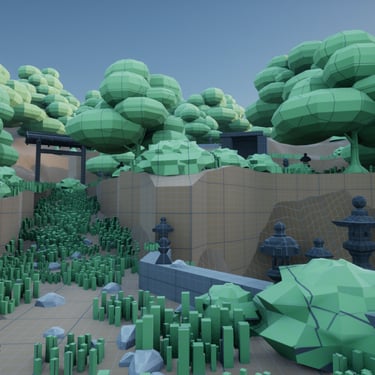
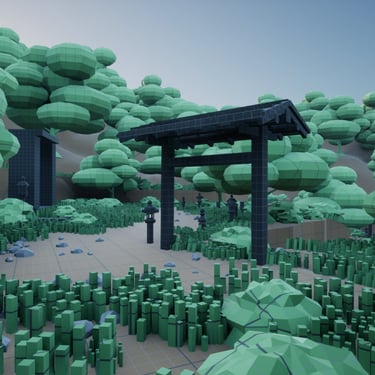
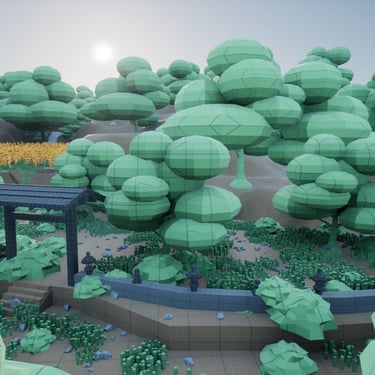
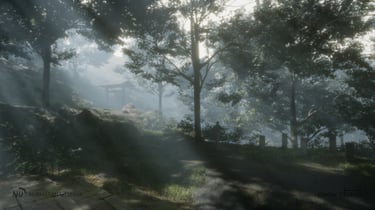
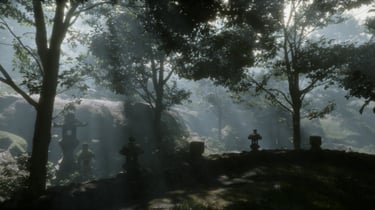
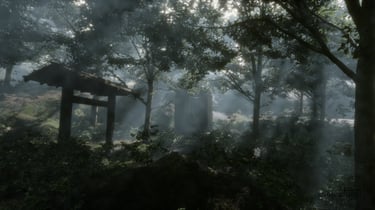
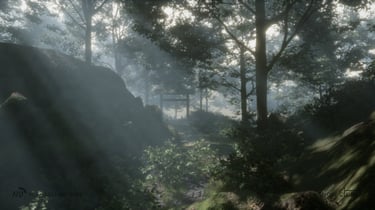
Cinematic Render
One Pager
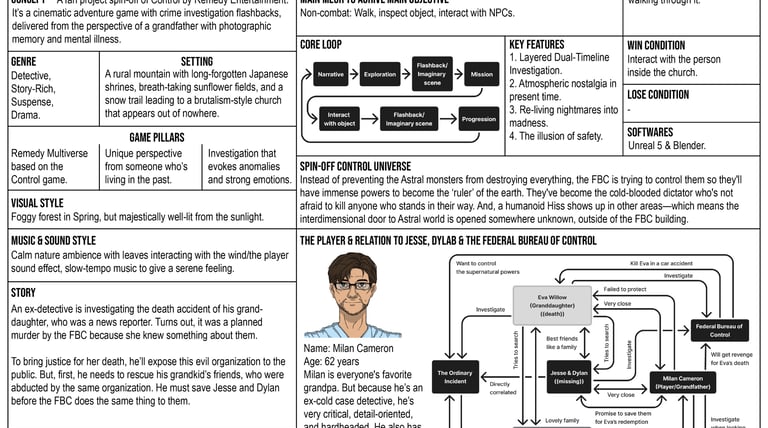
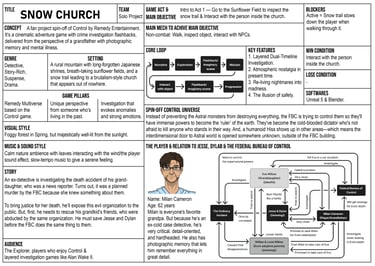
Playthrough (art pass)
Final Blockout

Things I’ve Learned
Deep research about areas that'll be made into level design is a must. Different places have different distinctive characteristics that are hidden behind details. Enter the blockout phase with the right understanding and mindset about the type of place we're working on.
After a brainstorming session, create a few high-quality layout sketches > create tons of low-quality layout sketches. It eases the process of making the 3D space since every part is already being considered when making the sketch, resulting in a better blockout with a higher gameplay experience.
Every area inside a level must have a purpose, no matter how trivial it is. It's good if there's narrative / discovery / combat aspect for each area, it's also okay if the purpose of the area is to give the player time to breathe and enjoy the scenery. Adapt to the story pacing and progression.
Level design is a connection phase between narrative, environment concept, game mechanic, mission design, etc. so it's important to blend everything seamlessly. Visual storytelling is a great way to aid them and convey the intended emotions, so maximize it properly.
Nature areas are aesthetic chaos, and they're rarely ordered like human-made environments. To make the nature level feel 'natural', create uneven ground, use organic objects to block paths, and use foliage inside the blockout to communicate the asset placements in the 3D environment phase.
Give a sense of freedom to the player (even though we still led them somewhere) by creating extra explorable areas outside of the areas where the player must go into to progress inside the story. Make sure it's fun and enjoyable to reward the player when they decide to explore it.
Resources
European Hornbeam: https://fab.com/s/bf4c7da201f5
Other assets and materials: Quixel Bridge, Unreal Marketplace
Audios: Epidemic Sound
© 2025 Nurhasanah Umar. All rights reserved.